Shanghai Raising Pharmaceutical Co. Ltd. has synthesized prodrugs of thiamine acting as amyloid-β (Aβ) protein production inhibitors reported to be useful for the treatment of neurodegenerative diseases, preferably Alzheimer's disease (AD).
Symbio Pharmaceuticals Ltd. has entered into a sponsored research agreement with Tufts University to conduct joint research on the intravenous formulation of the antiviral drug brincidofovir.
Research shows that microglia, macrophage cells found in the central nervous system, are needed to maintain nerve health by preventing the degeneration of the myelin sheath that protects neurons. The study, led by the University of Edinburgh and the University of Toronto and published on Dec. 14, 2022, in Nature, showed microglia could be a potential therapeutic target for neurological conditions involving myelin degeneration.
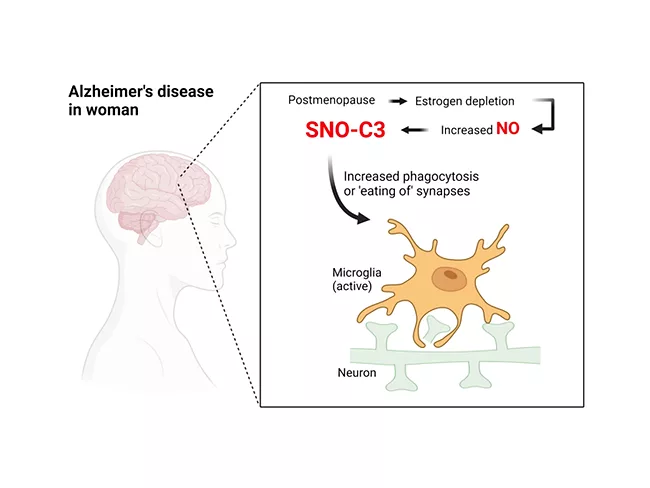
Alzheimer’s disease has a higher incidence in women. This sex difference was associated with a modification of certain proteins of the immune system. According to a recent study, the drop in estrogen with menopause increased the expression in the brain of a neurotransmitter, nitric oxide (NO), generating the S-nitrosylation of complement factor C3 (abbreviated SNO-C3), which activated the microglia.
Seelos Therapeutics Inc. has announced in vivo data demonstrating that a single dose of SLS-004 downregulated the production of α-synuclein in an established α-synuclein overexpressing animal model of Parkinson's disease.
Repeat expansions of two or more base pairs cause dozens of neurological disorders – Huntington’s disease, which is caused by an expansion of the triplet CAG in the coding sequence for huntingtin, is perhaps the most famous one. Now, investigators at Stanford University have shown that cancer genomes, too, frequently feature repeat expansions.
Investigators from Cerevance Inc. have reported the discovery and preclinical characterization of a novel tandem pore domain halothane-inhibited K+ channel 1 (THIK-1) inhibitor, C-101248, being developed for the treatment of neuroinflammation in Alzheimer’s disease (AD). NETSseq and histological analysis revealed that THIK-1 expression was up-regulated in microglia from different cortical regions of AD donors compared with aged matched nondemented control brains.
Tuberous sclerosis complex (TSC) is a multisystemic disorder caused by loss-of-function mutations in the TSC1 or TSC2 genes. Its clinical phenotype is heterogenous, but most patients with TSC have epilepsy.