An mRNA vaccine candidate that acts in the liver by recruiting memory T cells could be the key against malaria, according to a study in mice that demonstrated its efficacy by including a natural killer T (NKT) cell agonist.
A team of scientists led by The Wistar Institute has been awarded a 5-year National Cancer Institute (NCI) Program Project Grant valued at more than $12 million to explore the role of Epstein-Barr virus (EBV) in epithelial cancers. The project, which brings together scientists from The Wistar Institute and Harvard University, will focus entirely on the EBV-epithelial cancer link and look at metabolic and epigenetic vulnerabilities simultaneously.
Researchers from China Pharmaceutical University have disclosed the discovery and preclinical evaluation of a new receptor-interacting serine/threonine-protein kinase 2 (RIPK2) inhibitor, Zharp2-1, as a potential therapeutic candidate for the treatment of inflammatory bowel disease (IBD).
Researchers from Chongqing Medical University have reported discovering a novel cyclin-dependent kinase 7 (CDK7) inhibitor, N76-1, which they are investigating as a potential new candidate for the treatment of triple-negative breast cancer (TNBC).
Cessation Therapeutics Inc. has obtained IND clearance from the FDA to initiate a first-in-human trial of CSX-1004 for the prevention of fentanyl overdose. The trial in healthy volunteers is expected to begin next month.
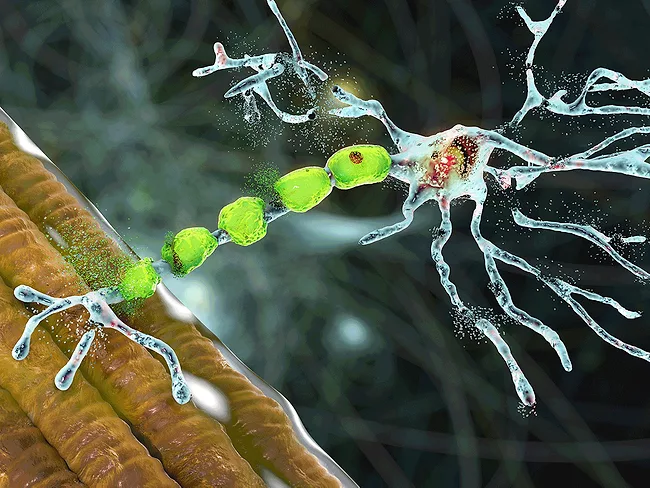
When a group of British scientists studied which proteins might be in the wrong place of the cell in amyotrophic lateral sclerosis (ALS) patients, they found hundreds of them mislocalized. Other studies had shown that TDP-43 protein was mislocalized. But it was not known that the phenomenon was widespread, and affected mRNA as well as proteins. “Our study revealed that these mislocalized proteins were heavily involved in RNA binding functions and exhibited high binding affinities to RNAs,” Rickie Patani told BioWorld.
Although huge strides have been made with antiretroviral therapy (ART) and prevention since HIV was first reported 42 years ago, there is still not an effective preventive vaccine or a scalable cure for those living with HIV. But broadly neutralizing antibodies (bNAbs) look to be a further step down the pathway to a cure, speakers said during the International AIDS Society meeting held July 23 to 26 in Brisbane, Australia.
Researchers at Shanghai Jingxin Biomedical Co. Ltd. and Zhejiang Jingxin Pharmaceutical Co. Ltd. have described fused bicyclic heteroaryl amide compounds acting as α-synuclein (SNCA) aggregation inhibitors reported to be useful for the treatment of frontotemporal, Lewy body and Parkinson's dementia, multiple system atrophy, and more.
Chia Tai Tianqing Pharmaceutical Group Co. Ltd. has identified proteolysis targeting chimeras (PROTACs) comprising an E3 ubiquitin ligase coupled to Wee1-like protein kinase (Wee1) targeting moiety via linker acting as Wee1 degradation inducers reported to be useful for the treatment of cancer.
 RSS
RSS