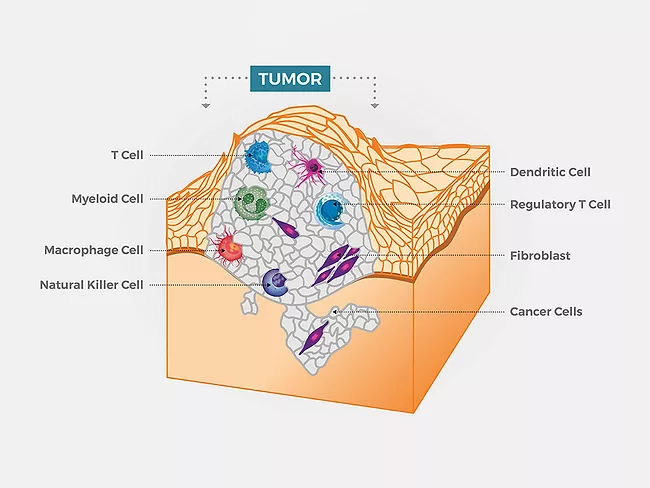
RHOJ, a small GTPase, could hold the key to the survival of tumor cells during cancer treatments. When epithelial cells transformed into mesenchymal cells, the Rho-related GTP-binding protein RhoJ regulated their resistance to chemotherapy. The scientists observed this mechanism in mouse models of skin squamous cell carcinoma, but their results could go beyond just one type of cancer. When the team started its experiments, which were published March 23, 2023, in Nature, “I had never heard about RHOJ before,” the lead author Cédric Blanpain told BioWorld. Blanpain is the director of the Laboratory of Stem Cells and Cancer at the Université Libre de Bruxelles (ULB).
Partially blocking a receptor that helps regulate the activity of the inflammatory cytokine molecule interleukin-6 (IL-6) seems to promote tissue regeneration and block degeneration in a model of osteoarthritis. As reported in the March 22, 2023, issue of Science Translational Medicine, the receptor, called glycoprotein 130 (gp130), regulates both positive and negative inflammatory responses that can help regenerate tissue, but also cause degeneration.
Flare Therapeutics Inc. has announced a US$123 million series B financing to support its work targeting novel transcription factors for cancer and other diseases.
Biohaven Ltd. has acquired global rights, excluding China regions, from Hangzhou Highlightll Pharmaceutical Co. Ltd. for TLL-041, now designated BHV-8000, an oral, brain-penetrant, highly selective, dual TYK2/JAK1 inhibitor, for neurological disorders.
Acetaminophen (APAP) is a very common nonprescription analgesic, harmless at low doses, that can cause acute liver injury and even death from acute liver failure when overdosed. The temporal course of acetaminophen overdose-induced liver injury (AILI) can be depicted in two stages – injury and recovery.
Shanghai Aryl Pharmtech Co. Ltd. and Zhejiang Hisun Pharmaceutical Co. Ltd. have described heterocyclic derivatives acting as GTPase KRAS (G12D mutant) inhibitors reported to be useful for the treatment of cancer.

 RSS
RSS