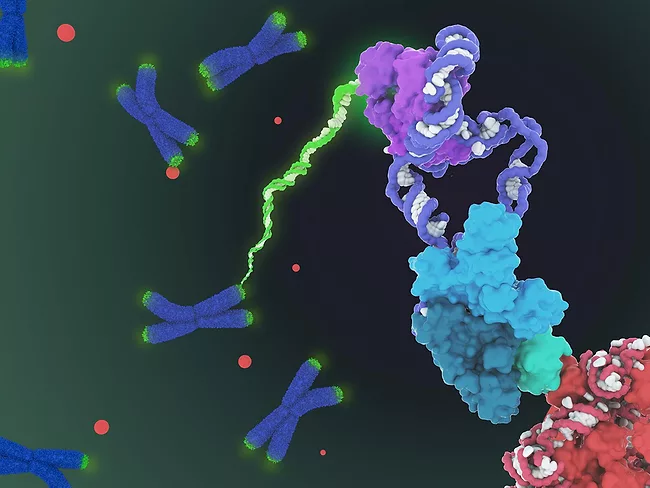
Arizona State University scientists have discovered an unprecedented pathway in a fungus to produce telomerase RNA (TER) from a protein-encoding messenger RNA (mRNA). Unlike in animals and other fungi, this fungal TER is transcribed by RNA polymerase III, lacks a protective 5′ cap and it is processed from the 3′-untranslated region of an mRNA transcript. This telomerase has two essential structural domains that keep it active. For now, scientists have only observed this process in the fungus Ustilago maydis, or Mexican truffle. “In animals, and even in Ascomycota, which is another fungal phylum, the telomerase RNA is transcribed by RNA polymerase II as an independent gene. This is the only case among all different kingdoms in eukaryotes that the telomerase RNA is processed from the mRNA molecule. It is a very unusual biogenesis pathway.” Julian Chen told BioWorld.
Sichuan Kelun-Biotech Biopharmaceutical Co. Ltd. has synthesized new heterocyclic RAF kinase and/or Ras GTPases inhibitors reported to be useful for the treatment of cancer.
Wigen Biomedicine Technology (Shanghai) Co. Ltd. has identified new histone deacetylase 1 (HDAC1) and/or HDAC3 inhibitors reported to be useful for the treatment of cancer.
Leitat Technological Center has patented 2,3-dihydro-1h-pyrrolo[3,2-b]pyridine derivatives acting as sigma non-opioid intracellular receptor 1 (SIGMAR1) and sigma intracellular receptor 2 (TMEM97) ligands reported to be useful for the treatment of pain, hyperalgesia, depression, anxiety and attention deficit hyperactivity disorder (ADHD).
Galecto Biotech AB has divulged new galectin-3 (LGALS3) inhibitors reported to be useful for the treatment of cancer, autoimmune disease, fibrosis and cardiovascular, eye, metabolic, cerebrovascular and inflammatory disorders, among other disorders.
Akita University and Tohoku University have described curcumin derivatives acting as β-catenin (CTNNB1) and NF-κB activation inhibitors reported to be useful for the treatment of cancer.
Hereditary tyrosinemia type 1 (HT1) is an inborn error of metabolism caused by deficiency of the fumarylacetoacetate hydrolase (FAH) enzyme and people with it are unable to metabolize the amino acid tyrosine. Toxic metabolites accumulate in the liver leading to severe oxidative damage.
Hanall Biopharma Co. Ltd. has clarified that the new FcRn inhibitor IMVT-1402, unveiled by its licensed partner Immunovant Inc. as a new development program for autoimmune diseases, is a compound discovered and developed by Hanall, HL-161ANS.
Mirecule Inc. has entered into a strategic collaboration and exclusive license agreement with Sanofi SA to develop and commercialize a best-in-class antibody-RNA conjugate (ARC) for the treatment of facioscapulohumeral muscular dystrophy (FSHD).
Endpoint Health Inc. has announced a new precision immunology program targeting inflammation mediated by tissue factor (TF)-dependent intracellular signaling.
 RSS
RSS