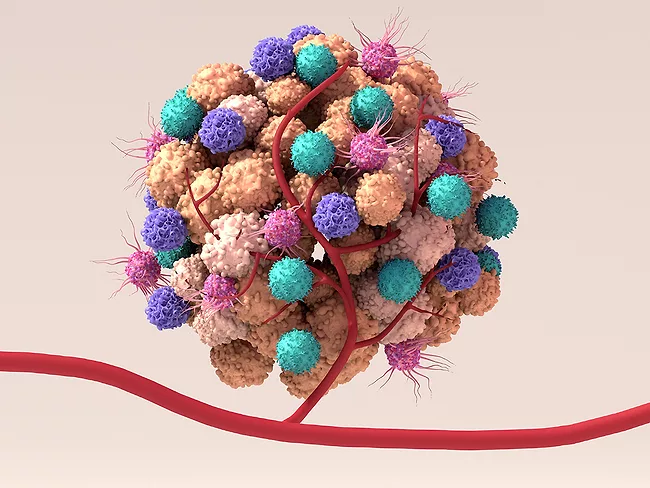
Two recent studies have reported new insights into the role of the tumor-associated microbiome in both drug response and metastasis. Researchers working at the Fred Hutchinson Cancer Center, Seattle, reported in the Nov. 16, 2022, issue of Nature that bacteria can promote the spreading of cancer as single cells with recruitment of myeloid host cells. In a parallel publication, the same team reported in the Nov. 15, 2022, issue of Cell Reports that the primary chemotherapy used to treat colorectal cancer (CRC), 5-fluorouracil (5-FU), was less effective when the tumor included bacteria that were insensitive to 5-FU antimicrobial activity.
Now, researchers at Stanford University School of Medicine have shown that by targeting CD47 – better known for its role as an innate immune checkpoint akin to PD-1 and CTLA-4 in the adaptive immune system – they were able to restore muscle stem cell function. Aged mice regained muscle strength comparable to younger animals after receiving an antibody treatment targeting CD47 signaling in muscle stem cells.
Maze Therapeutics Inc. recently presented data from preclinical studies of a small-molecule APOL1 pore function inhibitor, MZ-301, describing the compound’s in vitro and in vivo activity. APOL1 G1 and G2 genetic variants are associated with an increased risk of progressive kidney diseases in African ancestry people. There are no APOL1-targeted therapies addressing the underlying driver of these diseases.
Alport syndrome (AS) is a hereditary disease affecting type IV collagen that is caused – in 80% of cases – by the COL4A5 gene. In 10% to 20% of AS cases, a mutation cannot be detected.
Researchers from Carisma Therapeutics Inc. have provided details on the discovery and preclinical evaluation of a novel mesothelin-targeting chimeric antigen receptor macrophage (CAR-M), CT-1119, being developed as a potential solid tumor immunotherapy candidate.
Wigen Biomedicine Technology (Shanghai) Co. Ltd. has patented poly(ADP-ribose) polymerase (PARP) inhibitors, particularly PARP-1, reported to be useful for the treatment of cancer.
Kayothera Inc. and Princeton University have identified aldehyde dehydrogenase (ALDH) inhibitors reported to be useful for the treatment of cancer, type 2 diabetes and metabolic disease, as well as for male contraception.
Gilead Sciences Inc. has synthesized carboxy-benzimidazoles acting as glucagon-like peptide 1 receptor (GLP-1R) agonists reported to be useful for the treatment of arthritis, diabetes, eating disorders, macular degeneration, myocardial infarction, nonalcoholic steatohepatitis, sleep apnea and Parkinson's disease, among others.
Essa Pharma Inc. has divulged androgen receptor antagonists reported to be useful for the treatment of metastatic castration-resistant prostate cancer.
 RSS
RSS