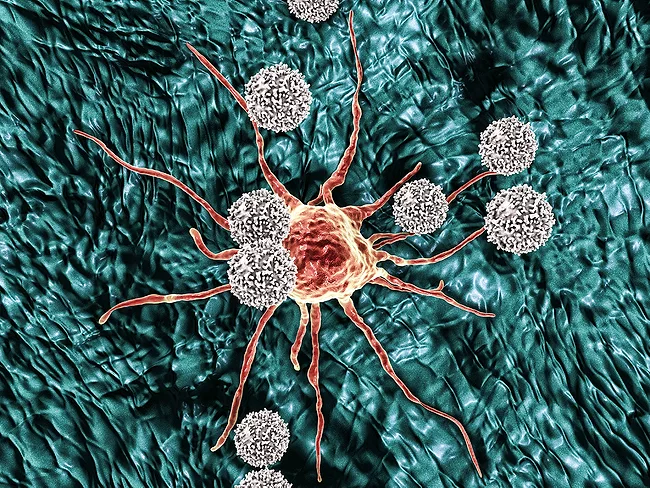
Researchers from Maruho Co. Ltd. published data regarding the development and preclinical evaluation of a novel orally available bromodomain-containing protein 4 (BRD4) inhibitor for the treatment of melanoma.
Endometrial cancer (EC) accounts for 20% to 30% of most malignant tumors of the female reproductive system, making it one of the most common. Furthermore, the 5-year survival rate of patients with early-stage EC is 90%, but this number decreases to 20% in late-stage disease.
H. Lundbeck A/S and Iambic Therapeutics Inc. have entered into a strategic research collaboration focused on the discovery of a small-molecule therapeutic for the treatment of migraine. The collaboration will leverage Iambic’s artificial intelligence (AI)-powered drug discovery platform.
Neuromyelitis optica spectrum disorder (NMOSD) is an autoimmune demyelinating disorder of the optic nerves and the spinal cord that is linked to the presence of anti-aquaporin (AQP4) autoantibodies. Satralizumab, a humanized anti-IL-6 receptor (IL-6R) antibody, has been approved for the treatment of NMOSD but the effects of IL-6R inhibition in myelitis severity have not been fully explored.
In one of the largest private rounds raised by an Italian biotech, Genespire Srl has closed a €46.6 million (US$51.88 million) series B, enabling it to lay the ground for a phase I/II clinical trial of its lead program, GENE-202, and to further develop its proprietary lentiviral vectors. The vectors are designed to be applicable to a range of liver-related metabolic disorders and, as its first indication, the company intends to treat methylmalonic acidemia, a serious genetic condition that results in impaired metabolism of certain amino acids and lipids.
At the 2024 European College of Neuropsychopharmacology (ECNP) Congress, researchers have presented work that could lead to ways to boost brain development and prevent neurodegeneration in individuals with Down syndrome.
The University of Michigan has identified proteolysis targeting chimeric (PROTACs) compounds comprising cereblon (CRBN) ligands covalently bonded to a CREB-binding protein (CREBBP; CBP) and/or histone acetyltransferase KAT3B (p300)-targeting moiety through a linker. They are described as potentially useful for the treatment of cancer, autoimmune and inflammatory disorders.
Gan & Lee Pharmaceuticals Co. Ltd. has described new S-adenosylmethionine synthase isoform type-2 (Mat2A) inhibitors reported to be useful for the treatment of cancer.
Merck Sharp & Dohme LLC and Otsuka Pharmaceutical Co. Ltd. have patented cellular tumor antigen p53 (TP53) (Y220C mutant) activators reported to be useful for the treatment of cancer.