Genzyme Corp. (Sanofi Genzyme) has identified receptor-interacting serine/threonine-protein kinase 1 (RIPK1; RIP-1) inhibitors reported to be useful for the treatment of Alzheimer’s disease, multiple sclerosis, amyotrophic lateral sclerosis and Parkinson’s disease.
Beijing Danatlas Pharmaceutical Technology Co. Ltd. has disclosed Werner syndrome ATP-dependent helicase (WRN; RECQ3; RECQL2) inhibitors reported to be useful for the treatment of cancer.
Potent siRNAs against B4GALT1 were designed in silico and screened in vitro (Huh7 cells, primary mouse, human hepatocytes) as well as in vivo (C57BL/6 mice) for the selection of a lead Galomic siRNA.
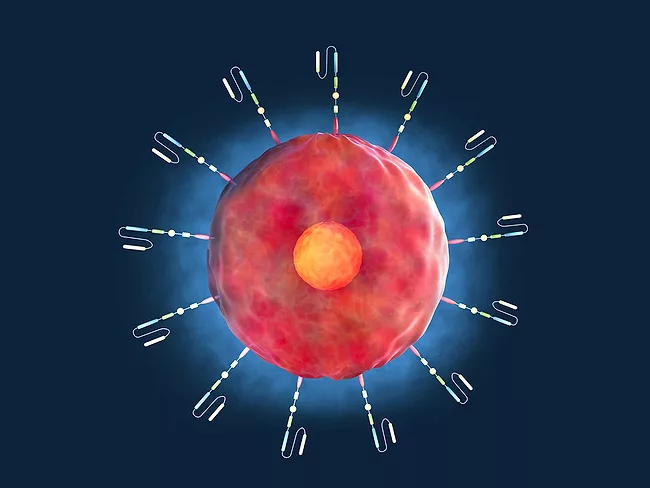
To address limitations with CAR T therapies targeting CD19, Allogene Therapeutics Inc. has developed ALLO-329, a CD19/CD70-targeting CAR therapy that is able to deplete activated alloreactive lymphocytes, while endowing dual targeting of CD19+ B cells and CD70+ T cells.
Rectify Pharmaceuticals Inc. has conducted preclinical testing on RTY-694, an oral dual-targeted positive functional modulator for use in the treatment of hepatobiliary disorders.
The collaboration aims to identify a small molecule that targets mutant androgen receptor (AR) mRNA splicing and causes selective destruction of the disease-causing mRNA.
The company analyzed genomic data provided by the Fred Hutch Cancer Center and compiled by the Genetics and Epidemiology of Colorectal Cancer Consortium (GECCO) to identify mutational signatures and single nucleotide polymorphisms (SNPs) predictive of colorectal cancer.
AGEN-1721 was designed as an Fc-enhanced bifunctional antibody to selectively target FAP and neutralize TGF-β via an optimized TGF-βR2 TRAP moiety fused to an engineered Fc region, with the aim of maximizing effector functions.
Researchers from SL Bigen Inc. and collaborators presented the preclinical characterization of BM-205, a novel entity of engineered MSCs designed to exert antitumor functions.
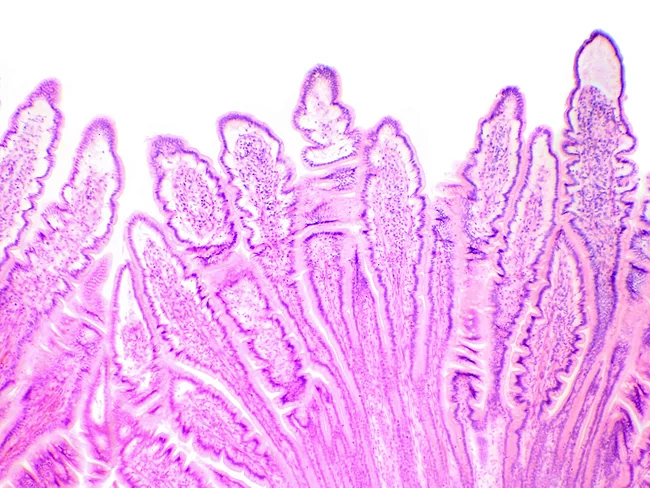
By comparing the transcriptomic profile of tissue regeneration after induced damage in the small intestine and colon with their transcriptomic landscape in their steady state, researchers have identified a pathway that unlinks tissue regeneration from tumorigenesis.

 RSS
RSS