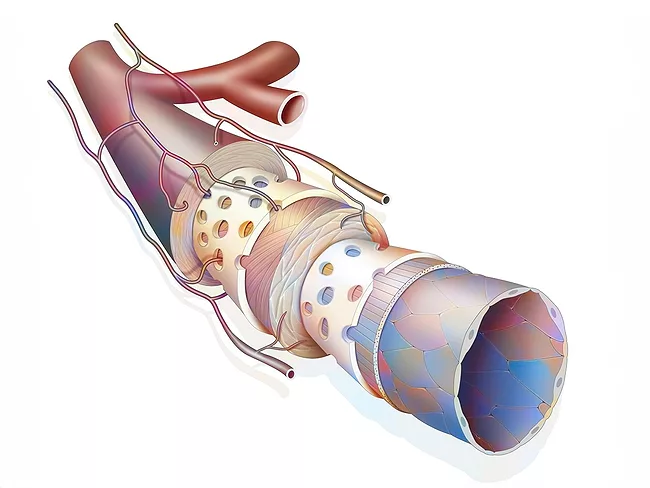
Researchers from the National University of Singapore and affiliated organizations presented data from a study that investigated the potential of targeting chondroitin sulfate (CS) synthesis as a therapeutic strategy for ameliorating hyperplastic arterial remodeling.
Thyroid hormone receptor-interacting protein 13 (TRIP13) is overexpressed in multiple myeloma (MM), where it is associated with progression and poor prognosis.
Skyline Therapeutics (Shanghai) Co. Ltd.’s SKG-1108, a novel one-time intravitreally delivered gene therapy, has been awarded U.S. orphan drug designation for the treatment of retinitis pigmentosa.
In obstructive sleep apnea (OSA), the collapse of the upper airway at sleep onset leads to a decrease in blood oxygen levels, frequent arousals from sleep and consequently fatigue and daytime sleepiness.
Researchers from Bristol Myers Squibb Co. disclosed the structure and presented preclinical data for the dual inhibitor of diacylglycerol kinases (DGK) α and ζ, BMS-986408. Optimization of a DGK-α-selective hit led to the synthesis of dual DGK-α and -ζ inhibitors.
Metagenomi Inc. has reported data from an ongoing preclinical study designed to provide evidence supporting the potential durability and safety of the company’s hemophilia A gene editing investigational therapy, MGX-001.
Acurastem Inc. has secured $4 million in grant funding from the California Institute for Regenerative Medicine (CIRM) to facilitate the development of its UNC13A program toward clinical trials for amyotrophic lateral sclerosis (ALS) and frontotemporal dementia (FTD).
In the search for more potent, safe and effective autophagy inhibitor compounds, researchers from the Wayne State University School of Medicine have developed novel piperazine- and piperidine-substituted quinoline derivatives GL-287 and GL-382, based on the quinoline scaffold of hydroxychloroquine.
Vertex Pharmaceuticals Inc. has described orexin OX2 receptor agonists reported to be useful for the treatment of amyotrophic lateral sclerosis, obesity, hypertension, retinopathy, multiple sclerosis, narcolepsy, hypersomnia and Parkinson’s disease.
Celgene Corp. has divulged proteolysis targeting chimera (PROTAC) compounds comprising an E3 ubiquitin ligase-binding moiety covalently linked to a MAP kinase-activated protein kinase 2 (MAPKAPK2; MK2)-targeting moiety via a linker.
 RSS
RSS