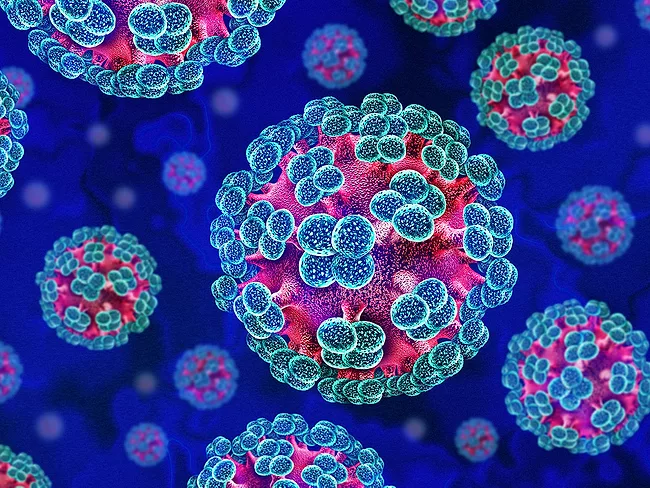
The recent hantavirus outbreak aboard the MV Hondius cruise ship has brought increased attention to an infection for which there are no widely available or FDA-approved therapeutics or vaccines, with limited research occurring only at the earliest stages. The rare Andes strain identified in the outbreak is known for human-to-human transmission, although the original infection comes from rodents. While hantavirus does not spread as easily as an infection like COVID-19, the mortality rate, at 30% to 40%, is significantly greater, and serves as another example as to why biopharmas must be at least two steps ahead with technology that can pivot to quickly address the spread of infectious diseases. Read BioWorld’s ongoing coverage of the current hantavirus outbreak.
News of eight infections and three deaths so far due to an emerging zoonotic virus has brought back unhappy memories of the early days of SARS-CoV-2. At a press conference on Thursday, officials from the WHO did their best to calm the public’s fears that the MV Hondius, the ship currently heading to the Canary Islands with its remaining passengers plus assorted medical, WHO and European Center for Disease Prevention and Control staff, is the 2026 version of the Diamond Princess.
A major challenge in tissue engineering is not only achieving the correct cellular organization of an engineered tissue, but also expanding it to a clinically useful size after implantation. Researchers from the Wyss Institute at Harvard University have developed a synthetic biology platform that genetically programs tissues to grow large organ implants on demand. Building on a 2017 study suggesting engineered liver tissues could respond to regenerative signals released after injury, the researchers set out to identify and harness those cues.
“If we could figure out what those signals were, we could synthetically drive these factors locally in an implant to control its growth ourselves,” first author Amy Stoddard told BioWorld. Stoddard is a postdoctoral researcher at the Wyss Institute.
Timothy Leary is dead, but he could be on the outside looking in with a smile on his face as U.S. President Donald Trump’s latest executive order (EO) fuels a surge in investment in companies researching and developing psychedelic drugs to treat mental health issues. The EO, Accelerating medical treatments for serious mental illness, is intended to address the increasing burden of suicide and serious mental illness, which impacts more than 14 million Americans.
Total med-tech financings reached $8.81 billion in the first quarter (Q1) 2026, a 6% decline from $9.33 billion in Q1 2025 but well above the post-downturn lows of recent years. The 2026 total exceeds $6.45 billion in Q1 2024 and $4.69 billion in Q1 2023, indicating continued recovery from the weaker funding environment that followed the 2021 peak. While still below the $16.59 billion recorded in Q1 2019 and the pandemic-era highs, the data suggest that financing activity has stabilized at a higher baseline, with 2026 maintaining momentum despite a slight year-over-year pullback.
More than four decades on from the approval of the first biologic drug, the industry has reached a tipping point, and biotech drugs now outnumber small molecules in the global R&D pipeline.
Med-tech deal value, excluding M&As, totaled $628.41 million in the first quarter (Q1) of 2026, an increase of about 322% from the $149.08 million recorded in Q1 2025 though a 36% drop from Q4 2025‘s $978.58 million.
Parkinson’s disease (PD) involves the progressive loss of dopaminergic neurons, particularly in the substantia nigra. This neurodegeneration is linked to the abnormal accumulation of α-synuclein, a protein that forms toxic aggregates and spreads between cells, damaging them. At the 20th International Conference on Alzheimer’s and Parkinson’s Diseases (AD/PD), held from March 17 to 21, 2026, in Copenhagen, several strategies were presented that aim to modify the course of the disease and offer real alternatives to purely symptomatic treatments.
Biopharma deal value reached $61.17 billion in the first two months of 2026, roughly a 60% increase from the $38.11 billion logged in the same period of 2025 and marking the strongest early year total in BioWorld’s records. The surge was driven by unusually strong activity in both months, with $31.16 billion in January and $30.01 billion in February.
 RSS
RSS