Australian researchers have found a drug combination that can bypass the cellular defenses in neuroblastoma that lead to relapse, and the discovery could lead to better treatment strategies for children whose cancers have stopped responding to standard chemotherapy.
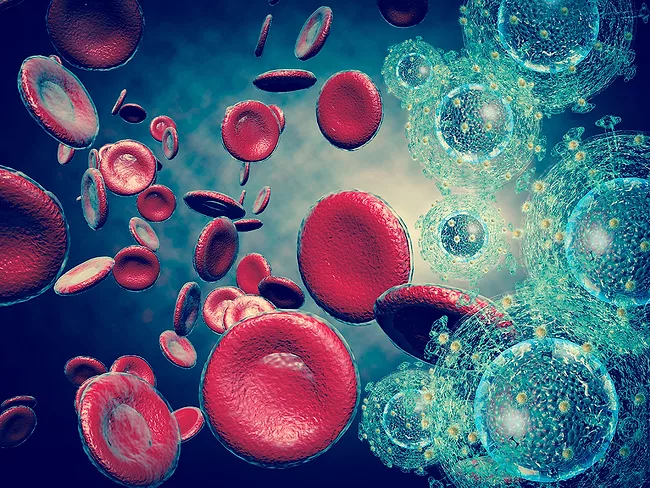
2025 has been the most challenging year in the efforts to fight HIV since at least the advent of antiretroviral therapy. In a report on “Overcoming disruption, transforming the AIDS response,” released last week ahead of World AIDS Day on Dec. 1, the Joint United Nations Program on HIV/AIDS (UNAIDS) described “a global system in shock” by sharply reduced funding from the U.S. and other wealthy nations. Scientifically, for now, progress is ongoing. To mark World AIDS Day, Nature published three independent studies on HIV.
A significant share of the risk and heritability of attention-deficit hyperactivity disorder (ADHD) is explained by rare genetic variants. A study led by scientists from Aarhus University in Denmark has uncovered their weight in this condition and identified three variants that will help to better understand their role, the risk of developing it, or its comorbidities, in contrast with the common and more frequent variants associated with ADHD.
It’s the biological resource that keeps on giving, and now UK Biobank has released the final tranche of data on the levels of 249 metabolites in the blood of its half a million participants.
Could GLP-1 receptor agonists (GLP-1RAs), already used in obesity and diabetes, be repurposed as drugs to slow aging? Hong Kong, one of the places in the world with the highest human longevity, is also home to a scientific study on the effects of GLP-1RAs. For the first time, scientists at the Chinese University of Hong Kong (CUHK) have assessed their pharmacological potential in later life using a multiomics preclinical approach.
At the 2025 annual meeting of the Society for Neuroscience in San Diego this week, Catherine Woolley’s plenary lecture was an unusual combination of debunking and affirming the importance of sex differences in the brain.
By transplanting a pig kidney into a brain-dead person, researchers have been able to conduct the first long-term study of the physiological processes occurring in both the transplant recipient and the pig organ for 61 days. The findings were published in the Nov. 14, 2025, issue of Nature in two papers – one focusing on physiological and immunological measurements, the other on multiomics.
Researchers from the Chinese Institute for Brain Research, the Chinese Academy of Medical Sciences, and their collaborators have identified adenosine as the driving force behind the rapid, fast-acting antidepressant effects of ketamine and electroconvulsive therapy (ECT). “Our journey into this area of research began over a decade ago, around 2013, when the clinical world was buzzing with excitement about ketamine's remarkably rapid antidepressant effects,” Minmin Luo, co-senior author of the study, told BioWorld.
South Korean researchers led by Lee In-suk of Yonsei University have reported the most complete oral microbiome catalog to date, with more than 72,000 genomes. Detailed in Cell Host & Microbe on Nov. 12, 2025, the database is expected to serve as a universal platform for academia and enable “precision microbiome medicine” for the industry, Lee told BioWorld.
The industry has been complaining about the drug pricing and reimbursement policies of European governments for years, but only now with the Trump administration’s moves to enforce most favored nation (MFN) pricing and reduce the U.S./EU price gap are governments facing up to the reality that they will have to pay more for new drugs.
 RSS
RSS