Regulatory snapshots, including global submissions and approvals, clinical trial approvals and other regulatory decisions and designations: Cardiowise, Locate Bio, Siemens Healthineers.
PERTH, Australia – Perth-based regenerative medicine company Orthocell Ltd. received marketing clearance from Australia’s Therapeutic Goods Administration (TGA) for its Celgro collagen medical device for dental guided bone and soft tissue regeneration applications. The approval validates the Celgro platform technology and clears the way for further approvals in nerve and tendon repair, Orthocell CEO Paul Anderson told BioWorld.
The U.S. FDA is actively working on guidance for conversion of emergency use authorizations (EUAs) to conventional premarket review programs, but the FDA’s Tim Stenzel said he does “not perceive a need to rush to convert EUAs” because of the volume of EUA applications, and because he does not expect the public health emergency “to end anytime soon.”
The latest global regulatory news, changes and updates affecting medical devices and technologies, including: FDA grants EUA to Quanterix for Simoa test; EC investing in startups; Alternatives to animal testing a challenge; USPTO seeks more uniformity between PTAB, courts; NICE nods to Olympus Plasma for BPH.
Regulatory snapshots, including global submissions and approvals, clinical trial approvals and other regulatory decisions and designations: Northstar Medical Radioisotopes, Spectrum Solutions, Ultromics.
Bioserenity SAS has gained U.S. FDA clearance for the Neuronaute electroencephalography (EEG) system and Icecap EEG wearable device, which aim to help physicians remotely monitor and assess electrical brain activity of people with epilepsy. The company noted that the Icecap and Neuronaute system will facilitate access to care in a variety of settings, including rural and remote environments.
The U.S. FDA’s safer technologies program, or STeP, is designed in part as a complement to the breakthrough devices program, but the September 2019 draft guidance lent little clarity as to what might constitute a significantly safer device. The Jan. 5, 2021, final guidance does little to clarify that question, however.
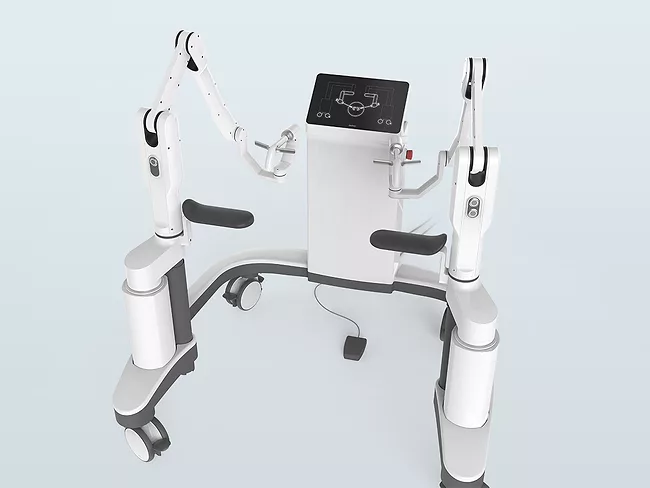
The medical device company Distalmotion SA has hit a regulatory milestone in the commercialization of its surgical robot, Dexter, earning a CE mark in Europe. The Dexter surgical robot is built with the aim of allowing surgeons to take a hybrid approach to minimally invasive surgery, using the robot for tasks such as suturing and complex dissections while switching to a laparoscopic approach for stapling and basic dissections.
The latest global regulatory news, changes and updates affecting medical devices and technologies, including: GAO says wound care spending dropped between 2016 and 2018; FDA updates COVID testing data; May 2019 Q-sub guidance appears in final form.
Regulatory snapshots, including global submissions and approvals, clinical trial approvals and other regulatory decisions and designations: Accuray, Bioserenity, Nirmidas Biotech, Spark Biomedical, Trinity Biotech.

 RSS
RSS