The K-health MIRAE Initiative, also known as Korean ARPA-H, announced plans to allocate about ₩162 billion (US$110 million) in nine new projects over the next five years, with a focus on strengthening national health security.
China’s National Medical Products Administration has approved Asieris Pharmaceuticals Co. Ltd.’s cold light photodynamic drug-device combination product, Cevira (APL-1702, hexaminolevulinate hydrochloride), which is used as a nonsurgical therapy for treating patients with cervical intraepithelial neoplasia grade 2.
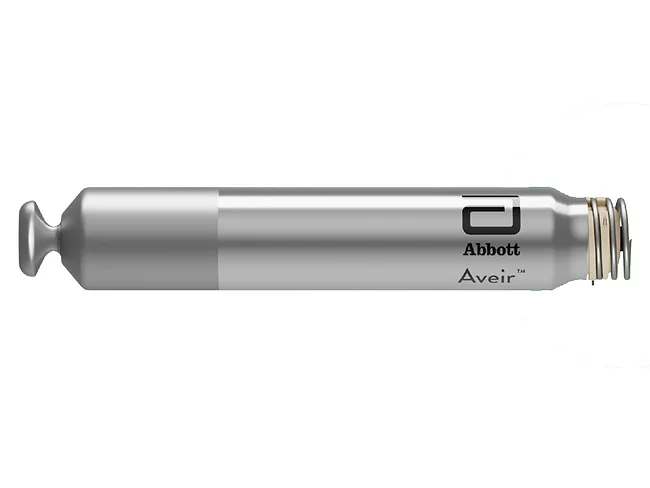
The U.K.’s National Institute for Health and Care Excellence (NICE) recommendation that leadless cardiac pacemakers be used as the standard of care for people with slow heart rhythms (bradyarrhythmias) is a boon for more than 2 million individuals living with the condition. The use of the technology will transform patients’ quality of life, reduce rates of infections and lower costs for the health care system.
The U.S. FDA approved Allurion Technologies Inc.’s premarket application for its swallowable gastric balloon system, which features its Smart Capsule, for weight loss. The clearance is boon for the company as GLP-1 agonists gets increasingly adopted to treat obesity. The approval also brings to the market a new non-invasive option to patients looking for alternative ways to lose weight.
Driven by prescription drug prices and oft-repeated claims that nearly every drug developed in the U.S. owes its origins to taxpayer-funded research, watchdog groups and some lawmakers have led demands over the years for price to be considered a “reasonableness” factor in determining whether the government can march in on patents under the Bayh-Dole Act.
With CE-marked products accounting for about 90% of medical devices currently used in Great Britain, the Medicines and Healthcare products Regulatory Agency (MHRA) is considering proposals for a path forward that would help the U.K. achieve its goal of becoming a leading country for med-tech access by 2030.
A jury in a U.S. District Court unanimously found that Medtronic plc violated federal and state antitrust laws relating to its blood sealing surgical devices and must pay $382 million in damages to Applied Medical Resources Corp.
The U.K.’s National Institute for Health and Care Excellence (NICE) has recommended the use of Abbott Laboratories’ Cardiomems HF system, giving people living with heart failure an option to monitor their condition daily from home. The implantable wireless sensor could transform care for individuals with the chronic condition as it will enable them to catch early warning signs before they escalate to medical emergencies.
The U.S. FDA released the latest version of its premarket cybersecurity guidance regarding medical devices, replacing the 2025 edition and offering recommendations on implementing measures for preventing digital attacks or authorized access.
A new draft guidance for organ procurement organizations doing business in the U.S. would seem to tackle some pressing issues with organ donation, such as the conditions in which a problem qualifies as an adverse event. Perhaps of greater interest to companies in the organ container business is that the Centers for Medicare & Medicaid Services is intent on increasing the availability of organ donations to deal with an insatiable demand for donated organs.
 RSS
RSS