Except for breakthrough devices and qualifying infectious disease drugs, the footwork for getting Medicare's new technology add-on payment (NTAP) can be more challenging than that needed to win FDA approval. It could be even tougher for products that use artificial intelligence (AI) or that follow a subscription model for pricing.
HONG KONG –Shanghai-based Zai Lab Ltd. has won an approval for the first innovative treatment for glioblastoma approved by China in more than 15 years, with the National Medical Products Administration’s (NMPA) nod for Optune in combination with temozolomide for use in patients with newly diagnosed glioblastoma (GBM), and also as a monotherapy for the treatment of patients with recurrent GBM.
“Our window of opportunity is closing. If we fail to develop a national coordinated response, based in science, I fear the pandemic will get far worse and be prolonged, causing unprecedented illness and fatalities,” Rick Bright, former director of the Biomedical Advanced Research and Development Authority, said today as he testified at a House subcommittee hearing on the U.S. response to COVID-19.
The U.S. Patent and Trademark Office (PTO) has opened a priority track for patents related to the COVID-19 pandemic, another signal of federal government intent on overcoming this new plague. However, Scott Marty, a partner with the Atlanta office of Ballard Spahr LLP, told BioWorld that while the program offers some distinct advantages for pandemic-driven patents, inventors should have their filings in good form before entry because any delays incurred by a less-than-airtight application could lead the PTO to boot the application out of this program.
LONDON – The U.K. is launching a £28 million (US$34.5 million) project to sequence the whole genome of every COVID-19 patient in the country treated in intensive care, with the aim of uncovering host genetic factors that lead some people to be more severely affected by the infection. The study will involve up to 20,000 people currently or previously treated in one of 170 intensive care units (ICUs), whose genomes will be compared to 15,000 people with a confirmed infection who had mild or moderate symptoms.
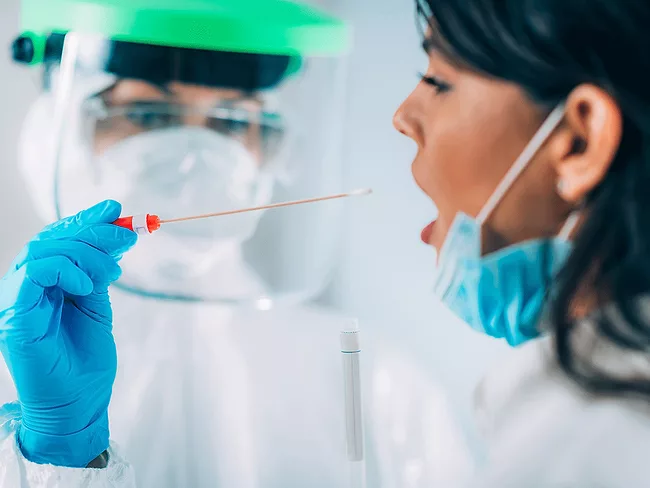
The May 12 Senate hearing regarding the COVID-19 pandemic included the usual conversations about contact tracing, but Anthony Fauci, director of the National Institute of Allergy and Infectious Diseases, said he is “cautiously optimistic” that one of the vaccines currently in trial in the U.S. will work, but that it is unlikely a vaccine will be ready by September 2020. In contrast, Assistant Secretary for Health Brett Giroir said testing capacity may reach 50 million tests per month by that time, thanks in part to the fact that antigen testing is now part of the FDA’s emergency use authorization mechanism.
DUBLIN – The Innovative Medicines Initiative (IMI), a public-private research partnership between the European Commission (EC) and Europe’s pharmaceutical industry, has boosted funding for a fast-track response to the COVID-19 pandemic from €45 million (US$48.8 million) to €72 million.
LONDON – Support is growing for human challenge trials in COVID-19 to be approved in order to speed up development of effective vaccines against the pandemic infection.
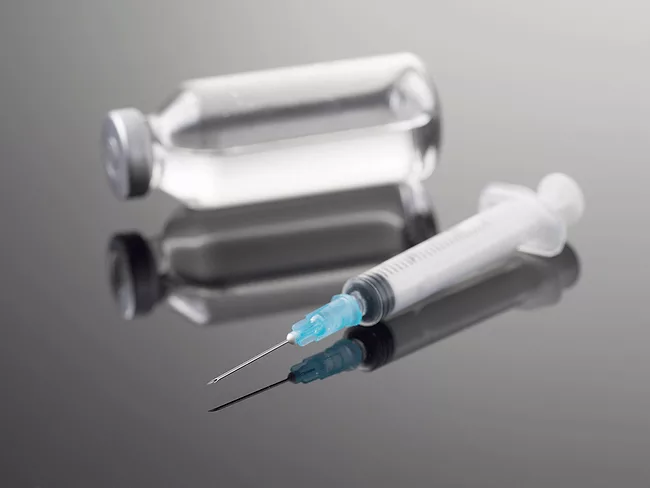
In the rush to develop a COVID-19 vaccine, integral parts of the equation are being overlooked in the U.S., according to a whistleblower complaint filed this week by Rick Bright over his removal as director of the Biomedical Advanced Research and Development Authority (BARDA). Even if millions of doses of vaccine are ready to go by January, as the NIH’s Anthony Fauci a few weeks ago said could happen, there may not be enough needles and syringes to deliver those doses.
Liquid biopsy startup Grail Inc., of Menlo Park, Calif., has reeled in $390 million in a series D financing that included new investors Public Sector Pension Investment Board and Canada Pension Plan Investment Board. Prior investor Illumina Inc., of San Diego, also participated in the round, as well as two unidentified backers.
 RSS
RSS