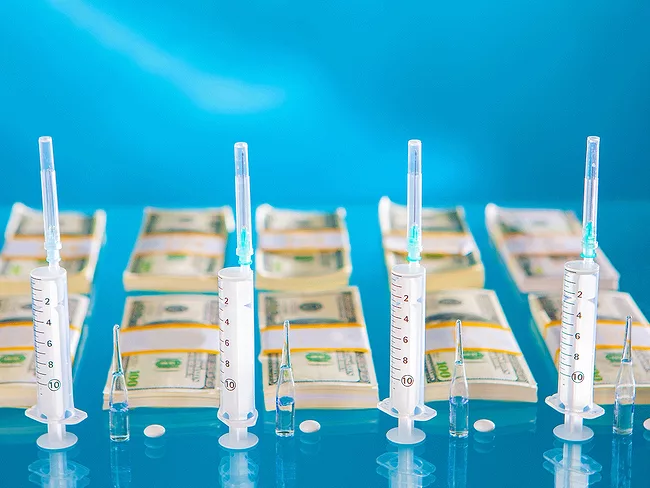
Just the name, Strategic National Stockpile (SNS), evokes the image of a huge warehouse, or a series of warehouses spread across the U.S., strategically stocked with all the medical supplies, diagnostics and drugs that will be needed nationwide to respond to any health emergency brought on by terrorists, nuclear attacks, pandemics or other public health hazards. The reality is so much more – and so much less.
The Senate Health, Education, Labor and Pensions (HELP) Committee met again June 23 to discuss the federal government response to the COVID-19 pandemic, and one clear signal that emerged from the hearing is that Congress will have to provide annual funding to build a sustainable infrastructure for vaccine development and manufacture if the nation is to deal appropriately with the next pandemic.
The bad news is, yes, the U.S. is in for a second wave of COVID-19, which is expected to hit during the upcoming flu season. The good news is the nation is much better prepared for the next wave, the NIH’s Anthony Fauci told a House Energy and Commerce Committee Tuesday.
LONDON – Epidarex Capital announced the closure of its £102.1 million (US$126.3 million) third fund, which will invest in very early stage biomedical and med-tech spin-outs from high-class but “under-ventured” universities in regions of the country where venture money is in short supply.
On June 17, the FDA approved checkpoint blocker Keytruda (pembrolizumab, Merck & Co. Inc.) “for the treatment of adult and pediatric patients with unresectable or metastatic tumor mutational burden-high (TMB-H) [?10 mutations/megabase (mut/Mb)] solid tumors, as determined by an FDA-approved test, that have progressed following prior treatment and who have no satisfactory alternative treatment options.”
PERTH, Australia – Australia’s largest life science investment fund is pressing the government for an urgent COVID-19 response package to support the country’s AU$170 billion (US$117 billion) life sciences sector that is struggling to survive in a post-COVID-19 ecosystem.
Countries and health care providers should hope for the best but prepare for the worst as a resurgence of COVID-19 is expected in the fall, just as the influenza season hits.
In a step toward what may become the new normal, at least for now, the Pediatric Oncology Subcommittee of the FDA’s Oncologic Drugs Advisory Committee is meeting virtually Wednesday and Thursday to review pediatric development plans for four cancer drugs.
The patent lawsuit between Merck & Co. and Microspherix LLC began when the latter sued Merck for infringement of patents for brachytherapy in Merck’s implantable contraceptive device, but Merck was unable to prevail in an inter partes review (IRP) or in an appeal of the IPR at the Court of Appeals for the Federal Circuit. After wading through questions about purported prior art, Merck failed to persuade the two courts that Microspherix’s non-provisional filing had strayed too far from the written description of the related provisional, thus handing Microspherix a win against its much larger rival in the market for drug delivery with microspheres.
Before the lessons of COVID-19 fade into yesterday’s news, Congress should start preparing for the next pandemic, Sen. Lamar Alexander (R-Tenn.) is advising. As the chair of the Senate Health, Education, Labor and Pensions Committee, the senator issued a white paper Tuesday identifying areas that must be addressed.
 RSS
RSS