DUBLIN – Thrive Earlier Detection Corp. and its academic and clinical collaborators have provided a first glimpse at the utility of a liquid biopsy test as a screening tool for picking up cancers in an asymptomatic population. In an interim one-year readout of data from the prospective five-year DETECT-A study in 10,000 women, an early version of Thrive’s Cancerseek test picked up 26 cancers ahead of standard-of-care screening, while the latter modality picked up another 24 cancers that Cancerseek missed.
Given all the public-private partnerships responding to the need for timely COVID-19 therapies, diagnostics and vaccines, the demands to forgo patents or exclusive licenses for coronavirus products and the clamor that industry shouldn’t “profit” from U.S. taxpayer-supported research are growing louder.
LONDON – The U.K. treasury announced a £500 million (US$622.5 million) COVID-19 bailout plan for research-based startups, which could see the government holding equity stakes in venture capital-backed firms.
KARACHI, Pakistan – The government of Pakistan is tapping into mobile technology to protect its pharmaceutical supply chain and prevent abuse. As part of an ongoing effort to deal with an overabundance of fake and counterfeit medicines, Pakistan has introduced a mobile app that allows for instant access to the country’s National Essential Medicines List (NEML) while giving patients access to drug information and the ability to lodge complaints with regulators.
A recent Senate hearing raised the question of whether privacy and confidentiality are at risk when software is installed in smart devices for disease surveillance purposes, but there may be no absolute guarantee of confidentiality, jeopardizing the goodwill of citizens who are wary of big government.
Public drug and device companies may want to think twice before eagerly jumping on the COVID-19 bandwagon with announcements overselling their efforts to develop or repurpose products to treat patients infected with the coronavirus.
LONDON - The director general of the World Health Organization has given a dignified and measured response to President Donald Trump’s decision to halt U.S. funding of WHO, pending a review of its handling of the coronavirus pandemic.
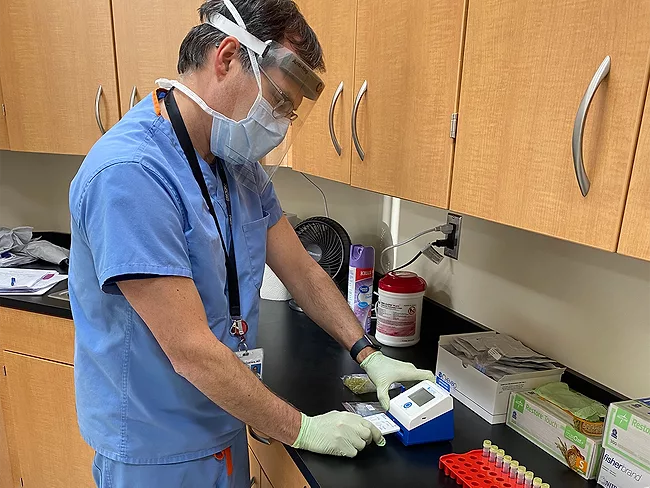
An April 15 U.S. FDA stakeholder call revisited several themes of interest in connection with diagnostics for the COVID-19 pandemic. However, Tim Stenzel, director of the agency’s Office of In Vitro Diagnostics and Radiological Health, said that while the agency has not yet authorized a home sample collection kit, “we do think it’s going to happen very soon.”
The age of molecular testing for the COVID-19 pandemic is still with us, but the emphasis in the months ahead will be on serological testing as a quicker, more useful mass testing alternative. However, test developers have a number of hurdles to overcome in devising these serological tests, including that antibodies for the virus’s antigens emerge at different times in the disease cycle, just one of several challenges that have to be met in the effort to bring the SARS-CoV-2 virus to heel.
Stony Brook Medicine has launched an FDA-approved, randomized investigational new drug (IND) trial to determine whether plasma from people who have recovered from COVID-19 can aid in the recovery of patients currently fighting the disease. Chembio Diagnostics Inc.'s COVID-19 rapid serological point-of-care test will be used to identify potential plasma donors.
 RSS
RSS