During a massive disaster or a pandemic, securing the necessary manufacturing capacity, needles, syringes, vials, properly labeled caps, reagents and other supplies is as critical as the development of the product itself. Some experts have been warning about these needs since COVID-19 first began spreading outside of China. Now members of Congress are sounding the alarm.
The COVID-19 pandemic has demanded much of the FDA, and commissioner Stephen Hahn said on a June 1 conference call that “there have been hiccups along the way” as the enormity of the threat came into view. The agency’s use of emergency use authorizations (EUAs) has drawn criticism, but Hahn defended those EUAs and other regulatory flexibilities even has he declared that the FDA is not “walking away from” randomized, controlled clinical trials as the gold standard for premarket review.
Fidget spinners are hand-held toys based on a roller bearing and three weighted lobes, which can spin freely, creating centrifugal force when activated manually. Generating centrifugal force with a fidget spinner takes neither electricity nor trained staff. And that has suggested to several researchers that such spinners, under the right circumstances, could be used for centrifugation under circumstances where reliably operating a centrifuge, for whatever reason, is a challenge.
Navidea Biopharmaceuticals Inc. CEO Jed Latkin said positive findings from the second interim analysis of the phase IIb study called NAV3-31 “were certainly better than what we were looking for” and will “make our partnering discussions a lot more interesting.”
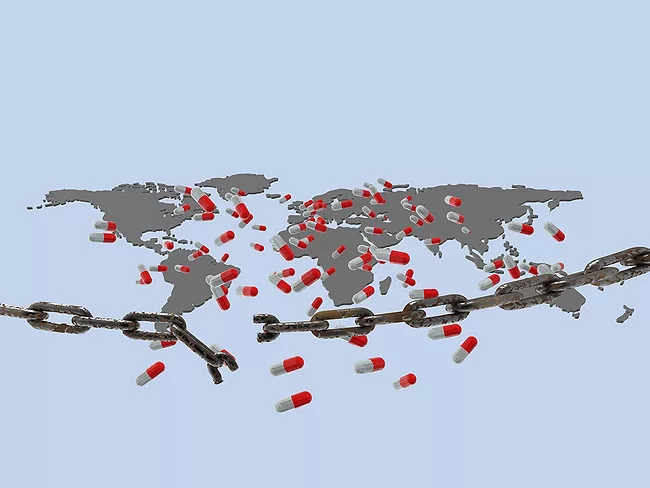
Scaling up to manufacture a massive volume of a COVID-19 vaccine, drug or innovative device that’s still in early stage development is easier said than done, especially in a global pandemic that has the supply chain stretched beyond capacity.
Rapid Micro Biosystems Inc. scooped up $120 million in a series C financing led by Ally Bridge Group, with participation by Endeavor Vision and existing investors Bain Capital Life Sciences, Longitude Capital, Xeraya Capital and Asahi Kasei. The Lowell, Mass.-based company has earmarked the funds to expand the global footprint of its contaminant testing platform for biopharmaceutical and vaccine manufacturing and for new product development.
Just days after Clovis Oncology Inc.'s Rubraca (rucaparib) became the first PARP inhibitor approved by the FDA to treat certain cases of metastatic prostate cancer (mCPRC) in third-line care, the agency granted an even broader label in the indication to its first-in-class competitor, Lynparza (olaparib). Endorsement of second-line use of Lynparza in mCPRC and an overall survival (OS) benefit listed in its updated label will help rapidly establish it as "the drug of choice in the [second] line, leaving little commercial opportunities for Rubraca downstream," SVB Leerink analyst Andrew Berens said.
Except for breakthrough devices and qualifying infectious disease drugs, the footwork for getting Medicare's new technology add-on payment (NTAP) can be more challenging than that needed to win FDA approval. It could be even tougher for products that use artificial intelligence (AI) or that follow a subscription model for pricing.
 RSS
RSS