Despite down-to-the-wire negotiations, the odds are that parts of the U.S. government will shut down at midnight Sept. 30, as Senate Democrats refused to support a seven-week, clean continuing resolution already passed by the House to keep the government funded while Congress hammers out fiscal 2026 spending bills.
Rakuten Medical Inc. is advancing a pipeline of solid tumor therapeutics built on its Alluminox platform worldwide, having gained conditional early approval of ASP-1929, an Alluminox-derived photoimmunotherapy, in Japan in 2020.
The struggle to avoid a partial U.S. government shutdown at midnight Sept. 30 is getting a lot of attention, as the stakes increase every day of the political standoff. Meanwhile, Sept. 30 also could be the end of the 43-year-old Small Business Innovation Research (SBIR) program, which has been a funding boon for biotech and med-tech startups, if Congress can’t come together on a reauthorization bill.
The unsettling impact that the Trump administration’s health care and tariff initiatives are having on M&A activity and financing is highlighted in a new survey of CEOs and investors, who say uncertainty related to the U.S. policy environment is the top challenge they face when it comes to executing deals.
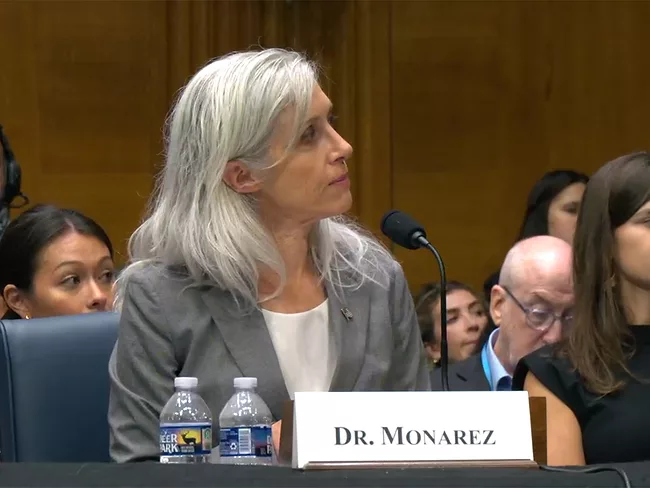
For enquiring minds that want to know, Susan Monarez laid out the details Sept. 17 of how she was fired as CDC director for the Senate Health, Education, Labor and Pensions Committee.
The Sept. 17 U.S. Senate Health, Education, Labor and Pensions Committee hearing on the CDC is throwing even more shade on the upcoming meeting of the agency’s reconstituted Advisory Committee for Immunization Practices (ACIP), which is expected to recommend changes to the childhood vaccine schedule.
Recent comments from CDER Director George Tidmarsh suggesting that the agency may be backing away from the use of its independent expert panels for individual product approvals seem to be supported by the numbers.
Less than two months after receiving priority review status for an NDA, Johnson & Johnson won U.S. FDA approval of Inlexzo, its intravesical gemcitabine-releasing system previously known as TAR-200, to treat adults with Bacillus Calmette-Guérin-unresponsive, non-muscle invasive bladder cancer (NMIBC) with carcinoma in situ, with or without papillary tumors.
The U.S. Federal Trade Commission has opened a docket for comment on noncompete employment contracts, a move which suggests that the agency may revert to evaluating these practices on a case-by-case basis rather than by issuing sweeping rules.
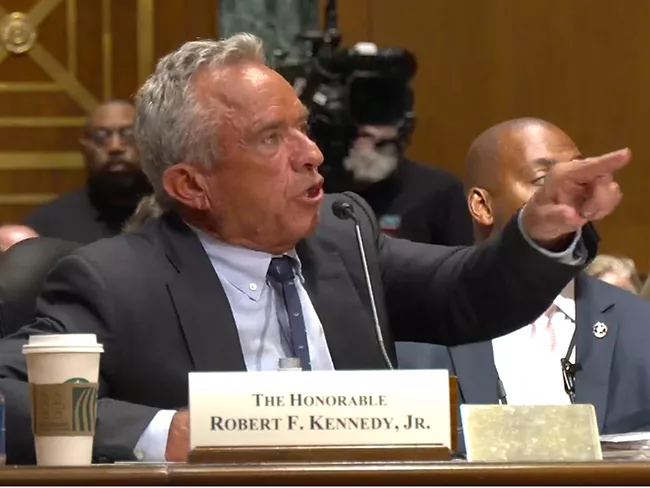
Sparks flew both ways Sept. 4 as Democratic senators pushed for Robert Kennedy to resign as secretary of the U.S. Department of Health and Human Services (HHS) during a Senate Finance Committee hearing ostensibly held to discuss the Trump administration’s 2026 health care agenda. But with Kennedy the only witness, the hearing focused on Kennedy’s perceived failings as HHS secretary. “The United States is in the midst of a health care calamity,” Ranking Member Ron Wyden, D-Ore., said in his opening comments, which were laden with personal attacks.
 RSS
RSS