So much for stability at the U.S. FDA. Three weeks after accepting the position as director of the FDA’s CDER, Richard Pazdur has informed the agency of his intention to retire at the end of the year.
Changes to a U.S. CDC website regarding autism and vaccines has sparked a backlash from numerous scientific and other groups, placing HHS Secretary Robert F. Kennedy Jr. (RFK) in the spotlight once again for appearing to break promises made earlier this year to secure his nomination.
A new oral HER2-directed breast cancer therapy from Bayer AG, and its companion diagnostic from Thermo Fisher Scientific Inc., have been approved by the U.S. FDA. Hyrnuo (sevabertinib), a reversible tyrosine kinase inhibitor, was greenlit by the agency for adults with locally advanced or metastatic non-squamous advanced HER2-mutant non-small-cell lung cancer.
Over a span of five-and-a-half months this year, 3.5% of the more than 11,000 clinical trials funded by the U.S. NIH had their grants terminated, according to an article published in the Nov. 17 JAMA Internal Medicine. That’s 383 trials that lost funding.
Researchers from the Chinese Institute for Brain Research, the Chinese Academy of Medical Sciences, and their collaborators have identified adenosine as the driving force behind the rapid, fast-acting antidepressant effects of ketamine and electroconvulsive therapy (ECT). “Our journey into this area of research began over a decade ago, around 2013, when the clinical world was buzzing with excitement about ketamine's remarkably rapid antidepressant effects,” Minmin Luo, co-senior author of the study, told BioWorld.
South Korean researchers led by Lee In-suk of Yonsei University have reported the most complete oral microbiome catalog to date, with more than 72,000 genomes. Detailed in Cell Host & Microbe on Nov. 12, 2025, the database is expected to serve as a universal platform for academia and enable “precision microbiome medicine” for the industry, Lee told BioWorld.
The U.S. House is expected to vote late Nov. 12 on an amended continuing resolution (CR) to end the historic 43-day partial government shutdown. Already passed by the Senate, the CR would fully reopen the government and fund it through Jan. 30. President Donald Trump has said he will sign the CR, which ensures federal employees furloughed during the shutdown will receive back pay and will not be terminated.
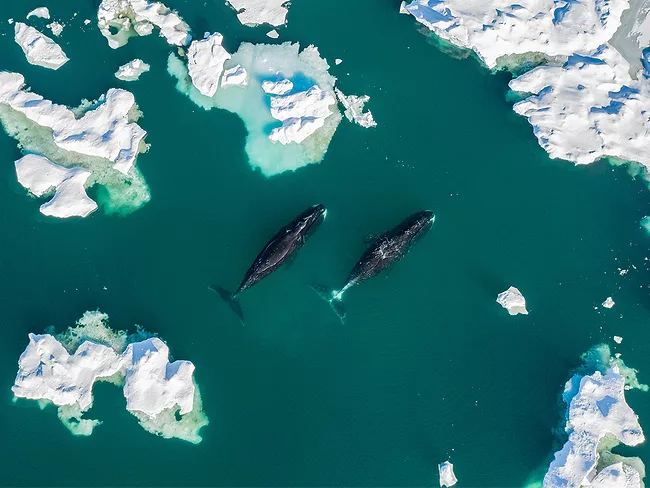
Bowhead whales (Balaena mysticetus) live year-round in the icy or near-icy waters of the Arctic and sub-Arctic. Although they migrate with the seasonal cycles of ice formation and melting, they never reach the warmer waters visited by other large marine mammals. Their adaptation to low temperatures may have also enabled them to live longer and avoid cancer, a disease closely linked to aging.

 RSS
RSS