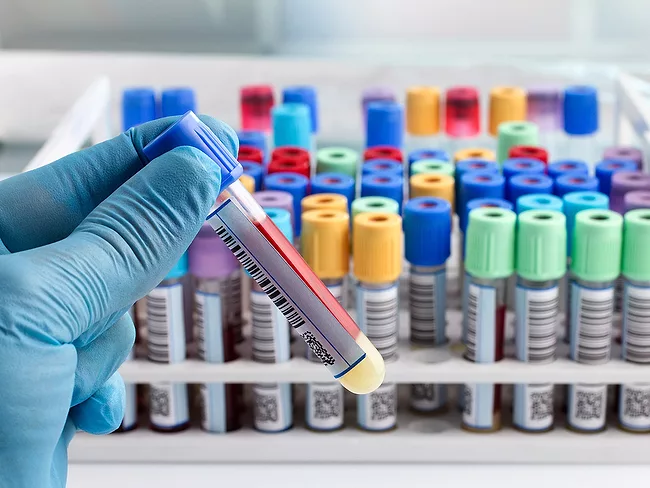
A committee of the U.S. House of Representatives wrapped up business in a late-running June 14 markup of spending bills that would give the U.S. FDA roughly $6.6 billion to work with in fiscal 2024. However, the final bill omits language in the manager’s mark that had called on the FDA to engage in rulemaking or guidance development for lab-developed tests, but the FDA made up for that by adding a proposal to engage in rulemaking for LDTs in its regulatory agenda.
Regulatory snapshots, including global submissions and approvals, clinical trial approvals and other regulatory decisions and designations: Apyx, Futura, Gencurix.
Med-tech happenings, including deals and partnerships, grants, preclinical data and other news in brief: Micare Pth, Mio-Guard, Nanovibronix, Ontrac MD, Pacbio, Redpoint Medical, Seegene, Tnacity, Treace, Veradigm, Werfen.
Negotiations over the text of the EU’s Artificial Intelligence Act (AI Act) are drawing to a close, but stakeholders are concerned about several key aspects of the legislation, such as how the term “artificial intelligence” is defined. However, Medtech Europe and other groups, including medical professional societies, are also concerned that the provisions for governance of data would seem to exclude real-world data as a source of evidence, an oversight they say will diminish the utility of AI software in health care.
Gamma imaging is about to move out of the centralized nuclear medicine department and to the point of care, with the start of a U.S. study of a portable device Seracam, under development by Serac Imaging Systems Ltd. The study, at Ohio State University, will compare the performance of Seracam to its larger, fixed, counterpart in imaging the same patients, on the same day.
Boston Scientific Corp. said that three-year primary patency and the four-year freedom from target lesion revascularization (TLR) rate for patients treated with the Ranger drug-coated balloon (DCB), in the Ranger II superficial femoral artery (SFA) study, are the best ever reported data for randomized trials using DCBs.
The June 14 hearing of the House Appropriations Committee was focused largely on spending levels for the Department of Agriculture, but there was also some concern over the proposed spending levels for the FDA. One of the more conspicuous features of the legislative report is the recommendation that the FDA finalize guidance or rulemaking for risk-based regulation of lab-developed tests (LDTs), a clear departure from the stance taken by Congress for a number of years.
 RSS
RSS