If we unraveled the DNA of the 46 chromosomes of a single human cell, it would barely measure 2 meters. If we did the same with the rest of the body, if we aligned the 3 billion base pairs of its 5 trillion cells, we could travel the distance from the Earth to the Sun more than 100 times. It seems unreachable. However, that is the unit of knowledge of the large sequencing projects achieved in 2023. From the generation of the human pangenome to cell-by-cell maps of the brain and kidneys, scientists this year have completed several omics collaborative projects stored in large international databases. Now, what’s the plan?
Modifying a patient’s DNA is no longer just for science fiction novels. The CRISPR gene editing technique developed by Jennifer Doudna and Emmanuelle Charpentier only took 10 years to reach the market as Casgevy (exagamglogene autotemcel/exa-cel, Vertex Pharmaceuticals Inc.), treating congenital pathologies such as β-thalassemia and severe sickle cell disease. But science does not stop.
If we unraveled the DNA of the 46 chromosomes of a single human cell, it would barely measure 2 meters. If we did the same with the rest of the body, if we aligned the 3 billion base pairs of its 5 trillion cells, we could travel the distance from the Earth to the Sun more than 100 times. It seems unreachable. However, that is the unit of knowledge of the large sequencing projects achieved in 2023. From the generation of the human pangenome to cell-by-cell maps of the brain and kidneys, scientists this year have completed several omics collaborative projects stored in large international databases. Now, what’s the plan?
Modifying a patient’s DNA is no longer just for science fiction novels. The CRISPR gene editing technique developed by Jennifer Doudna and Emmanuelle Charpentier only took 10 years to reach the market as Casgevy (exagamglogene autotemcel/exa-cel, Vertex Pharmaceuticals Inc.), treating congenital pathologies such as β-thalassemia and severe sickle cell disease (SCD). But science does not stop.
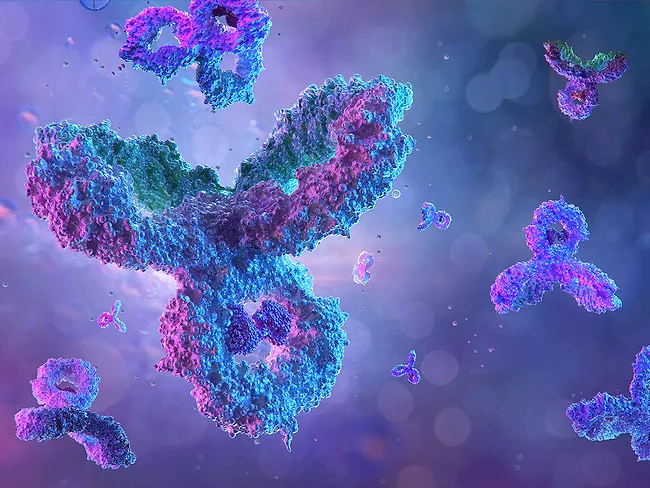
Scientists at Regeneron Pharmaceuticals Inc. have found a new way to permanently stop allergy through a combination of therapies that prevents the production of antibodies in secondary lymphoid organs and in bone marrow. The approach was tested in vivo in cynomolgus monkeys and in a mouse model.
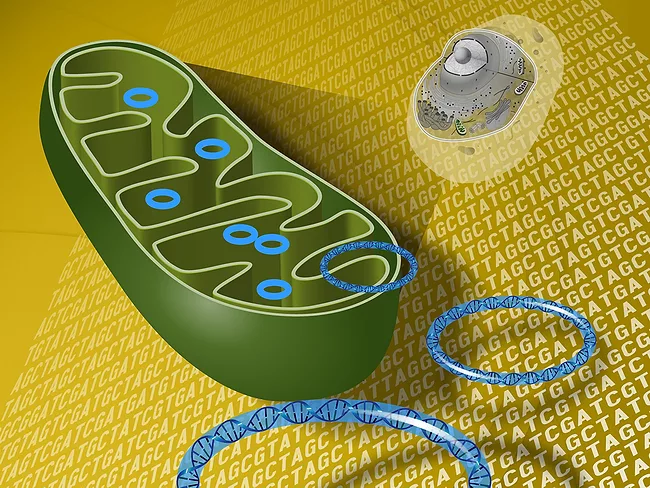
Although there are different methods of nuclear gene editing, there are still no effective treatments against mitochondrial disorders due to genetic alterations. Now, a group of researchers at Precision Biosciences Inc. and the University of Miami (UM) has developed a genetic edition platform that targets mitochondrial DNA (mtDNA) to delete its mutations.
“The ARCUS technology that we use is based on an enzyme found in nature called I-CreI. It is an enzyme that recognizes a 22 base pair DNA sequence within a species of green algae. And when it finds that DNA sequence, it will generate double-strand breaks,” first author Wendy Shoop, a scientist at Precision Biosciences, told BioWorld.
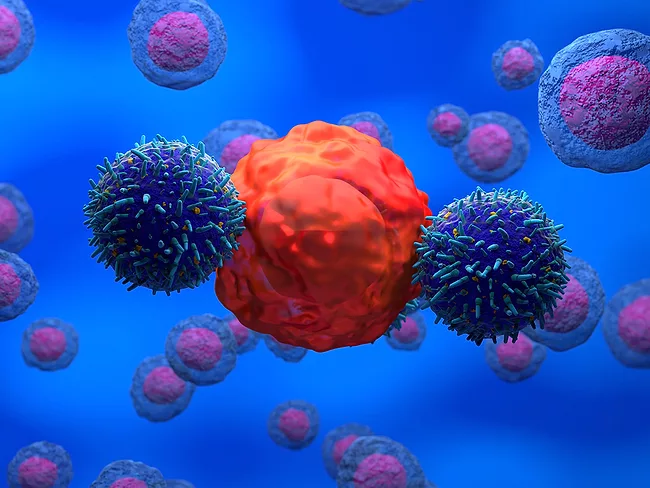
Researchers have developed a new approach for the development of improved CAR T cells with bifunctional degraders, which linked ubiquitin to an endogenous target protein. The key to the design was the use of multispecific protein degraders and E3 ligases, which increased the proliferation of CAR T cells and their antitumor potency. This combination can be adapted to different uses of cell therapies.
One of the difficulties for preventing the evolution of a tumor is that cancer progression can be promoted by undifferentiated or migrating cells whose states could follow different directions. At the 40th edition of Barcelona Biomed conferences at the Institute for Research in Biomedicine (IRB Barcelona), which took place from Nov. 27 to 29, 2023, and is entitled “Cancer in Context: Cellular, Tissue, and Organismal Determinants of Malignant Fates,” Angela Nieto presented her latest data on epithelial-to-mesenchymal transition (EMT).
Some autoimmune diseases are different in women and men. A group of researchers from the Chinese Academy of Sciences (CAS) has found a strong female bias in the response of a neurotransmitter receptor that is involved in many neurological processes.
Why cancer? The mechanisms that drive and maintain tumorigenesis are still a mystery. This is a play with different actors who have different roles in several contexts. One of these scenarios is represented by genetic and epigenetic conditions that determine the early trajectories of cancer cells. In addition, different mechanisms will control phenotypes and states that can take one or another direction toward cancer.