The eyes certainly have it. There are plenty of ocular gene therapies being studied in a crowded field and now there is a new one as Perceive Biotherapeutics Inc. has closed on a $78 million series B financing.
Phathom Pharmaceuticals Inc.’s shares sank 31% on news that the U.S. FDA will not take action on the company’s NDA for oral small-molecule potassium-competitive acid blocker vonoprazan by the Jan. 11 PDUFA date.
Eli Lilly and Co., through its wholly owned subsidiary Prevail Therapeutics Inc., is delving more deeply into gene therapies. In a new collaboration, Prevail will use privately held Capsida Biotherapeutics Inc.’s adeno-associated virus engineering platform, coupling the tech with Prevail’s gene therapies to target causes of CNS diseases.
New research published in BMJ Open claims there are inconsistencies in Amgen Inc.’s phase III Fourier study for cholesterol lowering. Cardiac deaths were numerically higher in those taking the PCSK9 inhibitor Repatha (evolocumab) combined with a statin than those in the placebo group, the research noted.
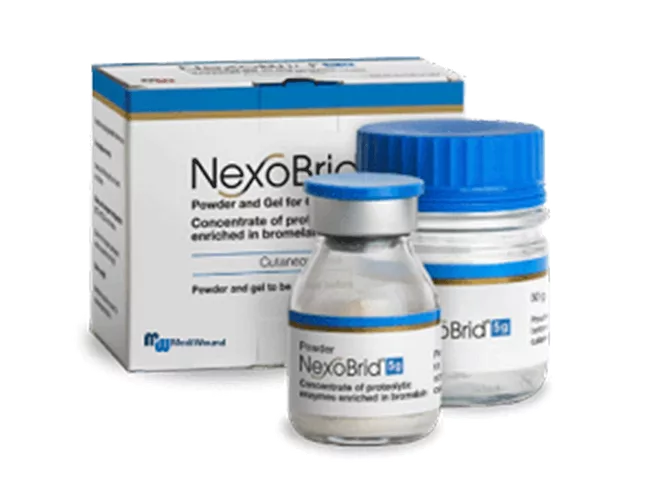
After working through a complete response letter (CRL) brought about by COVID-19 from the U.S. FDA in June 2021, Mediwound Ltd. has received the agency’s approval for Nexobrid (anacaulase-bcdb) to treat severe burns in adults.
Little more than a month after the U.S. FDA approved the first gene therapy for adults with hemophilia B, Uniqure NV’s Hemgenix, strong phase III data have come from Pfizer Inc. The Pfizer results show fidanacogene elaparvovec, a vector containing an AAV capsid and a high-activity human coagulation factor IX (FIX) gene for treating adult men with moderately severe to severe hemophilia B, hit the primary endpoint in the phase III Benegene-2 study. The one-time therapy is designed to allow those living with hemophilia B to be able to produce FIX instead of receiving regular, ongoing doses of exogenous FIX.
Two weeks ahead of its Jan. 6, 2023, PDUFA date, the U.S. FDA has approved the bispecific Lunsumio (mosunetuzumab) to treat adults with relapsed or refractory follicular lymphoma (FL) after two or more lines of systemic therapy. It’s the first bispecific antibody approved for treating any type of non-Hodgkin lymphoma (NHL). FL is the most common slow-growing form of NHL.
Two deals for antibody-drug conjugates inked since May between Merck & Co. Inc. and Sichuan Kelun-Biotech Pharmaceutical Co. Ltd. have blossomed eight months later into the year’s biggest agreement, one that could bring Kelun-Biotech up to $9.3 billion in development, regulatory and sales milestones. The exclusive license and collaboration deal has Merck paying an up-front $175 million to Kelun-Biotech plus promising to make an equity investment in the Sichuan, China-based company.
Two deals for antibody-drug conjugates inked since May between Merck & Co. Inc. and Sichuan Kelun-Biotech Pharmaceutical Co. Ltd. have blossomed eight months later into the year’s biggest agreement, one that could bring Kelun-Biotech up to $9.3 billion in development, regulatory and sales milestones.
Biopharma just wouldn’t be biopharma without continuing innovation. Even in a year rife with economic and regulatory turmoil, the industry still achieved major advancements set to change the health care landscape going forward. Standouts for 2022 include cell therapy and gene editing approaches making significant gains, while industry celebrated a new checkpoint inhibitor added to the oncology armamentarium.