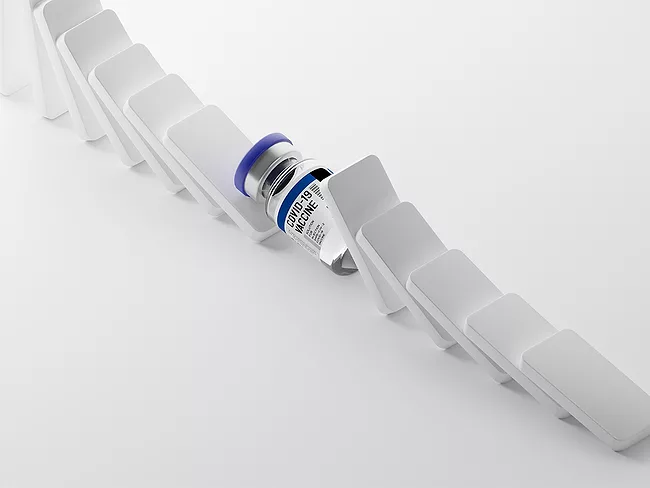
BioWorld’s 2022 end-of-year highlights included a toast to the future – of universal vaccines. Even before SARS-CoV-2 vaccines were developed in record time and saved countless lives during the COVID-19 pandemic, vaccines were a rare bright spot in the fight against infectious diseases. Bacteria are becoming multidrug resistant far faster than new classes of antibiotics are being developed, viral spillover events and vector ranges are increasing, and climate change is helping bacteria and fungi alike breach human thermal protections against infections.
The U.S. Department of Health and Human Services reported Aug. 27 that Susan Monarez no longer occupies the post of director for the CDC, a development that arose within hours of the FDA’s approval of two COVID-19 vaccines with historically restrictive labeled indications.
CSL Ltd.’s stock tumbled 16.88% on the news that it plans to cut 3,000 jobs and to hive off its Seqirus vaccine unit in a cost-cutting measure to save more than $500 million per year over the next three years.
Francisella tularensis, the causative agent of tularemia, is capable of causing severe illness at extremely low infectious doses through inhalation. No licensed tularemia vaccines exist in most Western countries, and current candidates lack efficacy against pneumonic forms. This highlights an urgent need for more effective vaccine strategies.
Solid phase III efficacy results for Moderna Inc.’s seasonal influenza vaccine, mRNA-1010, may lead the company to resubmit a BLA for a flu/COVID-19 combo shot it has been developing. The top-line data showed Moderna’s flu vaccine produced a superior relative efficacy that was 26.6% higher than a comparator standard-dose seasonal influenza vaccine in people ages 50 and older.
“I think elections are like pregnancy. … Everyone puts all of the energy into D-day – the birth. We’ve had the gender reveal, but what really, really matters is what happens now and the path ahead.” That was the instant response of Emma Walmsley, CEO of GSK plc, reacting to breaking news from the U.S. that Donald Trump has won a second term in office.
The existence of two approved therapies, Lumakras (sotorasib, Amgen Inc.) and Karzati (adagrasib, Mirati Therapeutics Inc.), has been a triumphant success against KRAS, a protein that was once considered undruggable.
The existence of two approved therapies, Lumakras (sotorasib, Amgen Inc.) and Karzati (adagrasib, Mirati Therapeutics Inc.), has been a triumphant success against KRAS, a protein that was once considered undruggable. KRAS is the most frequently mutated oncogene in solid tumors. KRAS driver mutations are found in about 30% of non-small-cell lung cancers (NSCLC), about half of colorectal cancers, and more than 90% of pancreatic cancers. Lumakras and Karzati both target the G12C mutation. Inhibitors that target other mutations, like G12D, are now making their way through preclinical and clinical development, while some companies are developing therapies that would target mutated KRAS more broadly, irrespective of the specific mutation that is activating the protein.
Although huge strides have been made with antiretroviral therapy (ART) and prevention since HIV was first reported 42 years ago, there is still not an effective preventive vaccine or a scalable cure for those living with HIV. But broadly neutralizing antibodies (bNAbs) look to be a further step down the pathway to a cure, speakers said during the International AIDS Society meeting held July 23 to 26 in Brisbane, Australia.
Although huge strides have been made with antiretroviral therapy (ART) and prevention since HIV was first reported 42 years ago, there is still not an effective preventive vaccine or a scalable cure for those living with HIV. But broadly neutralizing antibodies (bNAbs) look to be a further step down the pathway to a cure, speakers said during the International AIDS Society meeting held July 23 to 26 in Brisbane, Australia.