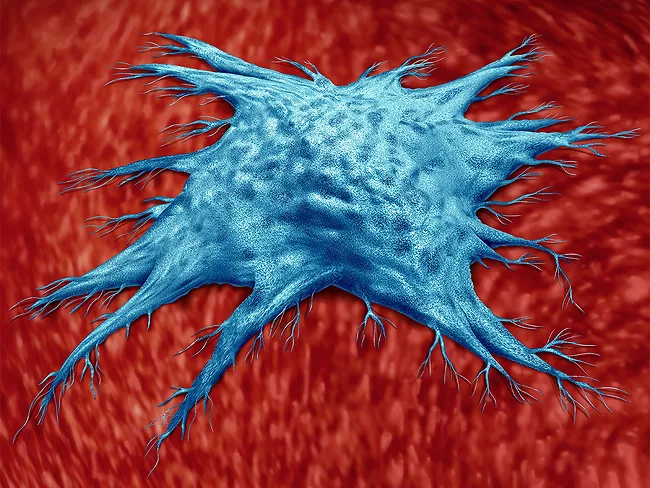
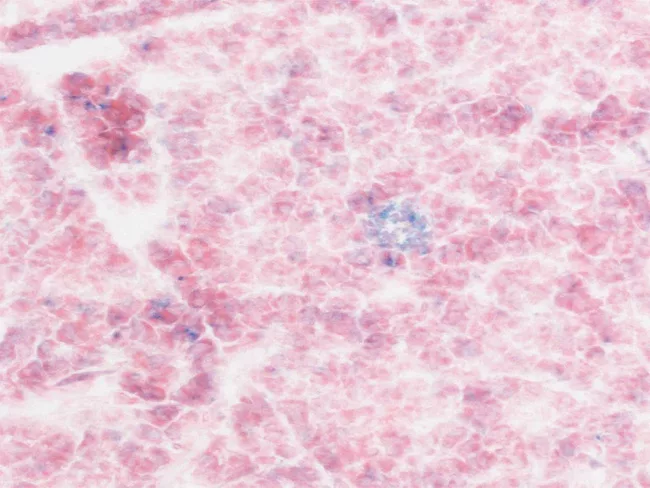
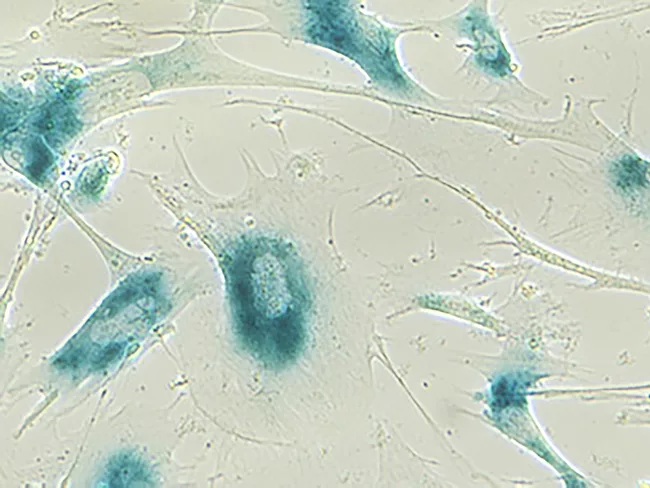
The sea anemone Stichodactyla helianthus, which carpets the Caribbean seafloor, may hold the key to eliminating the senescent cells that survive cancer therapy. A collaboration led by Spanish scientists across several international research centers has discovered a new type of toxin that selectively eliminates senescent cancer cells.
The sea anemone Stichodactyla helianthus, which carpets the Caribbean seafloor, may hold the key to eliminating the senescent cells that survive cancer therapy. A collaboration led by Spanish scientists across several international research centers has discovered a new type of toxin that selectively eliminates senescent cancer cells.
The sea anemone Stichodactyla helianthus, which carpets the Caribbean seafloor, may hold the key to eliminating the senescent cells that survive cancer therapy. A collaboration led by Spanish scientists across several international research centers has discovered a new type of toxin that selectively eliminates senescent cancer cells.
The sea anemone Stichodactyla helianthus, which carpets the Caribbean seafloor, may hold the key to eliminating the senescent cells that survive cancer therapy. A collaboration led by Spanish scientists across several international research centers has discovered a new type of toxin that selectively eliminates senescent cancer cells.
Senescence is a hallmark of aging, and senescent cells have a reputation to match. They are ‘zombie cells,’ sort of dead themselves but alive enough to poison their surroundings through senescence-associated secretory phenotype (SASP). The reality, though, is more complex.
CAR T cells could be repurposed to target senescent cells and delay the effect of aging. A study by scientists at Cold Spring Harbor Laboratory showed how to design them and demonstrated the advantages of this therapy in mice. “We only gave one dose, and we could have benefits [for] really long periods of time,” lead author Corina Amor told BioWorld.
Researchers from the University of Queensland discovered that senolytic therapies can suppress long-COVID neuropathology and long-term disorders caused by viral infections by reducing senescent cells, thereby reducing inflammation. Published Nov. 13, 2023, in Nature, the study examined the use of human pluripotent stem cells to generate small mini human brain organoids to screen for antiaging interventions called senolytics that selectively eliminate senescent cells that accumulate with age, lead author Julio Aguado told BioWorld.
Positive data from Unity Biotechnology Inc.’s phase II study of UBX-1325, a senolytic BCL-XL inhibitor for treating diabetic macular edema, boosted the stock out of the penny range. Shares of the South San Francisco-based company’s stock (NASDAQ:UBX) rose sharply, 54% on Aug. 12, to $1.31 each.
Destroying senescent cells in the aging stem cell niche, either genetically or pharmacologically using the small-molecule senolytic ABT-263 (navitoclax; Abbvie Inc.), enhanced hippocampal neurogenesis and cognitive function in mice, a Canadian study led by scientists at the University of Toronto has found.
Investigators have identified a previously unrecognized population of senescent cells, called p21high cells, in fat tissue and demonstrated their contributory role in metabolic dysfunction, obesity, insulin resistance and type 2 diabetes.