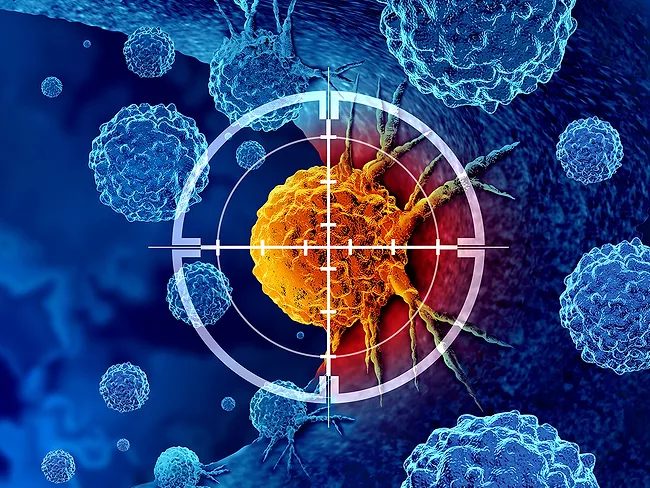
BMAL1 expression is tied to important cellular processes, including cell proliferation, migration, cell cycle and DNA damage repairing. There is increasing evidence that it regulates the expression of various oncogenes and tumor-suppressor genes in cancer cells. Researchers hypothesized that modulating BMAL1 expression could be a new therapeutic approach for treating cancer, such as triple-negative breast cancer (TNBC).
Investigators have shown that REED1 expression was elevated during stress, which in turn suppressed hippocampal synaptogenesis and induced major depressive disorder (MDD)-like behavior through mTORC1 signaling. The impact of REDD1 modulation was investigated in the preclinical setting for MDD.
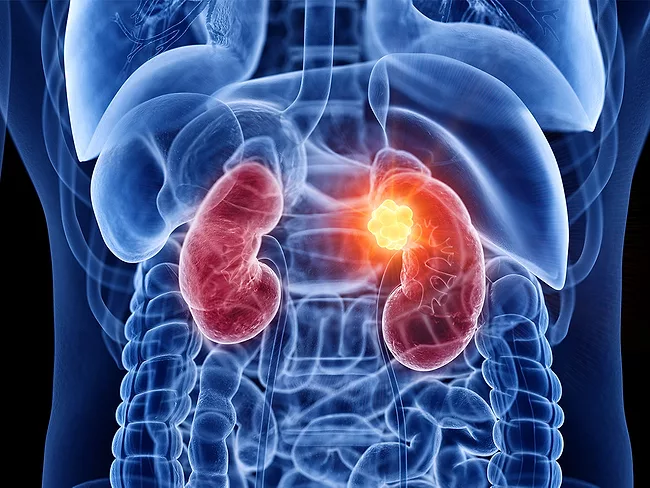
The N6-methyladenosine (m6A) RNA modification has a role in cancer progression, including renal cell carcinomas (RCCs). Recent work showed that KIAA1429, which serves as a scaffold for the m6A methyltransferase holocomplex, is significantly upregulated in hepatocellular carcinoma tissues and presents oncogenic roles in breast and gastric cancers. However, the potential role of KIAA1429 in clear cell RCC and its underlying regulatory mechanism remain largely unknown.
Understanding epi-transcriptome changes in diffuse midline gliomas H3 K27-altered (DMGs) could provide novel therapeutic options. RNA N6-methyladenosine (m6A) is a key epi-transcriptomic modification regulating RNA processes. A recently published study from the University of Sydney and collaborating institutions aimed to explore the m6A landscape in DMG.
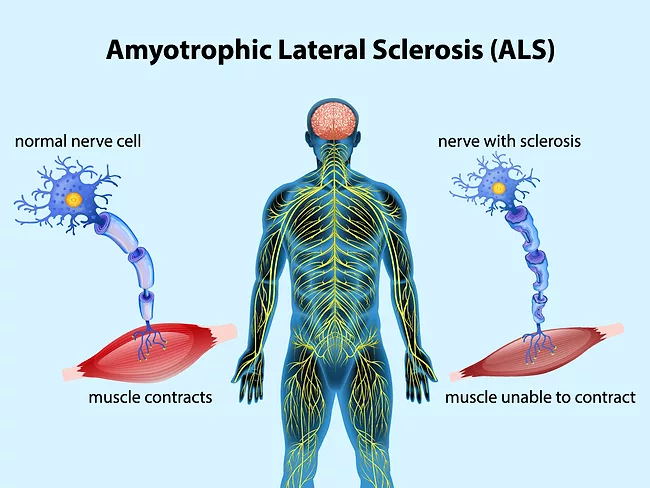
Amyotrophic lateral sclerosis (ALS) is a fatal neurodegenerative disease characterized by the progressive degeneration of motor neurons, leading to muscle wasting and paralysis, among others. Due to its high clinical heterogeneity, effective therapies are still not available.
In recent work, researchers from Shanghai Jiaotong University School of Medicine and Shanghai Colorectal Cancer Research Center reported that the transcription factor hematopoietically expressed homeobox (HHEX) promotes tumorigenesis in colitis-associated colorectal cancer. In a new paper, the team aimed to further characterize the biological function and potentially dysregulated mechanisms of HHEX during intestinal inflammation, which remained largely unexplored.
Insilico Medicine Cayman Topco has established a strategic research collaboration with Aska Pharmaceutical Co. Ltd. to identify novel therapeutic targets for challenging gynecological conditions, including endometriosis, uterine fibroids and adenomyosis.
Insitro Inc. has expanded its strategic collaboration with Bristol Myers Squibb Co. to advance a broadened portfolio of therapeutic programs for amyotrophic lateral sclerosis (ALS).
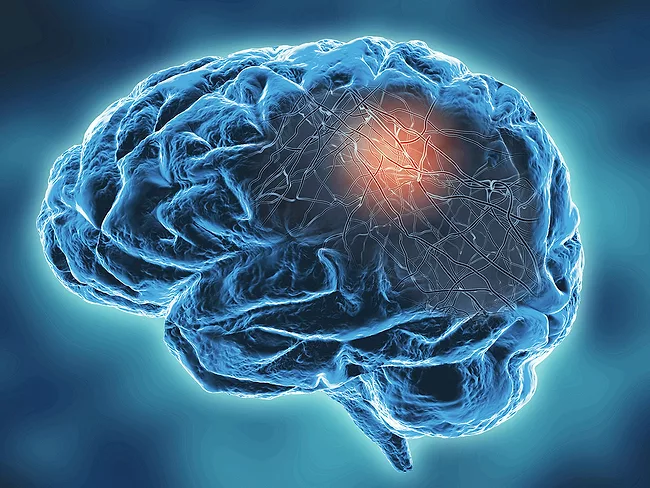
Neuroinflammation has arisen as a key factor in the pathophysiology of Alzheimer’s disease (AD). Chronic immune activation in the brain leads to the release of pro-inflammatory cytokines and other inflammatory mediators that contribute to neuronal damage, thus impacting cognitive function during the progression of the disease. Transcriptomic and epigenomic analyses were performed to understand the epigenetic mechanisms behind the expression of inflammatory genes in AD brain.
HORMA domain-containing protein 1 (HORMAD1) is a protein that promotes meiotic recombination and its expression is usually restricted to germ-line cells, although it has been shown to be actively expressed out of context in about 60% of triple-negative breast cancers (TNBCs). A team at The Institute of Cancer Research has found that this aberrant expression in tumor cells perturbs mitotic arrest and generates aneuploidy, leading to a weakening of the spindle assembly checkpoint and in kinetochore-microtubule error correction.