Full-Life Technologies Ltd. announced Sept. 29 the completion of a $77 million financing, comprising $50 million in series C equity and $27 million in debt financing, which will be used to advance a portfolio of radiopharmaceuticals and radionuclide-drug conjugates worldwide.
Full-Life Technologies Ltd. announced Sept. 29 the completion of a $77 million financing, comprising $50 million in series C equity and $27 million in debt financing, which will be used to advance a portfolio of radiopharmaceuticals and radionuclide-drug conjugates worldwide.
A U.S. FDA complete response letter (CRL) citing manufacturing concerns has stepped into the way of a rare genetic disorder treatment. Fortress Biotech Inc. and its subsidiary, Cyprium Therapeutics Inc., said the letter in response to the NDA for CUTX-101, an injectable formulation of copper histidinate, noted cGMP deficiencies at the facility where the Menkes disease treatment is manufactured.
The threat of tariffs on imports of branded drugs is about to be realized after U.S. President Donald Trump announced a 100% import duty will apply beginning Oct. 1. However, the flurry of recent announcements by pharma companies of investments in U.S. manufacturing plants may have paid off, with the president saying in his announcement on Truth Social that the 100% rate will be enforced “unless a company is building their manufacturing plant in America.”
The threat of tariffs on imports of branded drugs is about to be realized after U.S. President Donald Trump announced a 100% import duty will apply beginning Oct. 1. However, the flurry of recent announcements by pharma companies of investments in U.S. manufacturing plants may have paid off, with the president saying in his announcement on Truth Social that the 100% rate will be enforced “unless a company is building their manufacturing plant in America.”
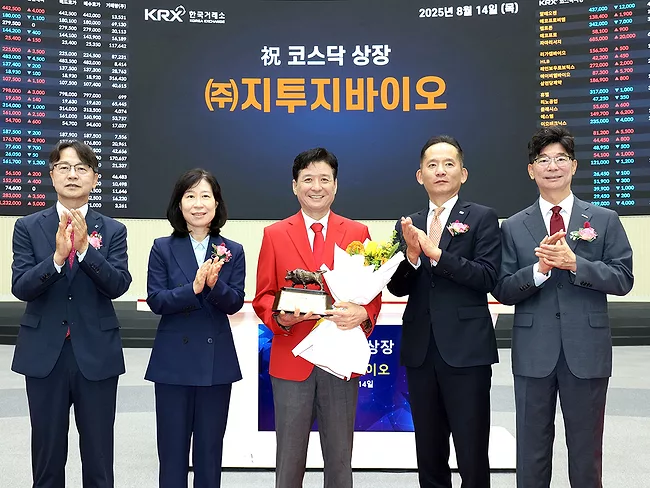
G2Gbio Inc. debuted on the Korea Exchange with a ₩52.2 billion (US$37.7 million) IPO Aug. 14. Nearly half of the funds raised will be used to expand Cheongju-si, South Korea-based G2Gbio’s manufacturing plants and help mass produce sustained-release injectable drug products such as GB-5001, its lead candidate in development as a once-monthly formulation of donepezil (Aricept; Eisai Co. Ltd.) for Alzheimer’s disease.
In his latest effort to incentivize domestic manufacturing of drugs and their key ingredients, U.S. President Donald Trump issued an executive order Aug. 13 to replenish the country’s nearly empty Strategic Active Pharmaceutical Ingredients Reserve (SAPIR), giving a preference to U.S.-produced APIs.
G2Gbio Inc. debuted on the Korea Exchange with a ₩52.2 billion (US$37.7 million) IPO Aug. 14. Nearly half of the funds raised will be used to expand Cheongju-si, South Korea-based G2Gbio’s manufacturing plants and help mass produce sustained-release injectable drug products such as GB-5001, its lead candidate in development as a once-monthly formulation of donepezil (Aricept; Eisai Co. Ltd.) for Alzheimer’s disease.
Location, location, location. While location is as important in manufacturing as it is in buying a home, it could become even more so for drug companies when, and if, the global biopharma sector tariff U.S. President Donald Trump continues to tease becomes a reality. In the shadow of the impending tariff, the FDA is working on a draft framework, the two-phase FDA PreCheck, to make it faster and easier for biopharma companies to relocate their manufacturing to the U.S.
South Korea’s pharmaceutical manufacturing reached an all-time high of ₩32.86 trillion (US$23 billion) in 2024, representing a 7.3% increase from 2023 and the highest on record since the country began count in 1998.