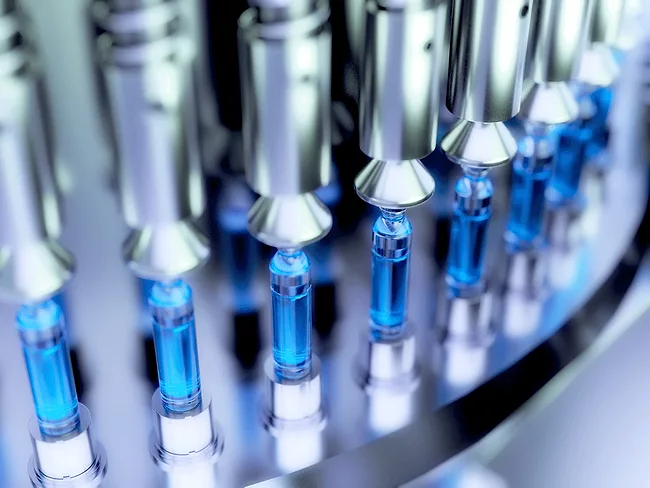
DUBLIN – Treefrog Therapeutics SA closed a $75 million series B round this week, which will help to increase its reach and its profile, as it pursues its highly ambitious objective to drive the adoption of a new way of making induced pluripotent stem cells (iPSCs) at scale. The Bordeaux, France-based firm is not a CDMO in any sense, however. It is a fully fledged biotech, with early stage iPSC-based programs in Parkinson’s disease, cardiovascular disease and bone marrow transplant, among others. It’s just that it is also attempting to revolutionize how those cells are cultivated before it administers them as therapies.
With the Americas having the dubious distinction of the most COVID-19 cases in the world, the Pan American Health Organization (PAHO) is answering that “wake-up call” with plans to develop a collaborative platform to develop mRNA vaccine production in Latin America and the Caribbean.
As many lower and middle-income countries continue to scramble for COVID-19 vaccine doses, which are largely being manufactured in Europe and the U.S., their own regulatory rules may be getting in the way in some instances.
The Make in India initiative will be a long-term driver of local medical device manufacturing and will boost exports as well as a production linked incentive scheme, according to a report by market research firm Fitch Solutions.
Novavax Inc. now says it plans to submit an emergency use authorization (EUA) to the FDA for its highly efficacious COVID-19 vaccine, NVX-CoV2373, sometime in the fourth quarter, backing off previous plans of a second-quarter and then a third-quarter filing.
While regulators and policymakers across the world are stressing the need for equitable access to COVID-19 vaccines, therapies and devices, their own policies and regulations may be getting in the way of that goal. The World Trade Organization (WTO) released a list of trade-related bottlenecks July 20 that are hindering access to pandemic-related medical products.
The U.S. isn’t the only country tossing COVID-19 vaccines due to potential cross-contamination of the drug substances manufactured at an Emergent Biosolutions Inc. plant.
The FDA’s November 2019 two-day hearing regarding the use of metals in medical devices generated at least one actionable recommendation, namely that manufacturers disclose all materials used in devices in product labels. The agency has reacted to that recommendation in the form of a discussion paper that proposes to require that product labels provide a deep level of detail regarding the materials found in the device, a notion that received the backing of industry during the November 2019 hearing.
Additive manufacturing, often referred to as 3D printing, has evolved considerably over the past few decades, and plays a significant role in the world of orthopedic devices. Despite numerous technological advances, additive manufacturing (AM) still accounts for a small share of the device market and may never overwhelm traditional manufacturing for the med-tech industry due to a number of limitations.
HONG KONG – The Vietnamese Ministry of Health (MoH) has published a draft decree intended to refine the legal framework for regulating medical devices in the country. Released under the title Official Dispatch No. 2271/BYT-TB-CT, the draft document consolidates the amendments made to the current decree and introduces new sections addressing clinical trials, the Essential Principles for Safety and Efficiency of Medical Devices, and advertising.