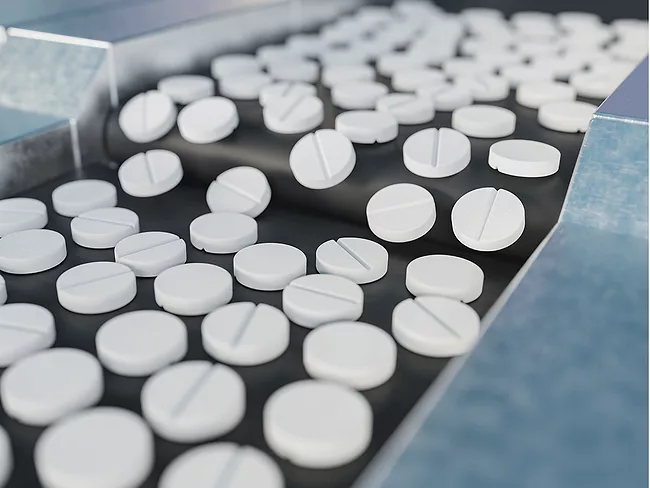
A heads up for the biopharma and med-tech industries: The U.S. government is going beyond warning letters to slap companies for violating the FDA’s good manufacturing practice (GMP) regulations. KVK Research Inc., a U.S.-based generic drug manufacturer, pleaded guilty March 6 to two misdemeanor counts of violating the Federal Food, Drug and Cosmetics Act by introducing adulterated drugs into interstate commerce. As part of the plea, the company agreed to pay a proposed fine and forfeiture amount of $1.5 million.
A China-based manufacturer of active pharmaceutical ingredients (API) suspended producing API for the U.S. market following an FDA inspection that found “significant deviations” from good manufacturing practices at the facility.
A China-based manufacturer of active pharmaceutical ingredients (API) suspended producing API for the U.S. market following an FDA inspection that found “significant deviations” from good manufacturing practices at the facility.
Cell and gene therapy companies continue moving away from traditional treatment modalities into a future that’s often unclear. A panel of CEOs said at the Biotech Showcase in San Francisco that, instead of aiming for developing silver bullet therapies that knock out indications in a single blow, they tend to only be able to take incremental steps in development.
In his latest effort to boost the U.S. manufacturing base, President Joe Biden is invoking the Defense Production Act (DPA) to expand the domestic production capabilities for essential medicines, medical countermeasures (MCMs) and their critical inputs.
In a balancing act between supply and drug quality, the U.S. FDA tipped the scales on behalf of quality, slapping an import alert on Intas Pharmaceuticals Ltd. in June, followed by a July 28 warning letter requiring the India-based company to develop and implement a global corrective action and preventive action plan.
In a balancing act between supply and drug quality, the U.S. FDA tipped the scales on behalf of quality, slapping an import alert on Intas Pharmaceuticals Ltd. in June, followed by a July 28 warning letter requiring the India-based company to develop and implement a global corrective action and preventive action plan.
A huge sigh of relief from the life sciences industry greeted U.S. President Joe Biden’s executive order that’s intended to shore up domestic manufacturing of products developed with taxpayer support. “It’s like the Titanic, [but] we just missed the iceberg,” Joseph Allen, executive director of the Bayh-Dole Coalition, told BioWorld. The fear for the past few years has been that the administration would follow in the wake of the Department of Energy, which broadly expanded the current Bayh-Dole U.S. manufacturing preference.
A huge sigh of relief from the life sciences industry greeted U.S. President Joe Biden’s executive order that’s intended to shore up domestic manufacturing of products developed with taxpayer support. “It’s like the Titanic, [but] we just missed the iceberg,” Joseph Allen, executive director of the Bayh-Dole Coalition, told BioWorld. The fear for the past few years has been that the administration would follow in the wake of the Department of Energy, which broadly expanded the current Bayh-Dole U.S. manufacturing preference.
One of the companies wanting to be part of the upcoming U.S. launch of Humira biosimilars is instead exploring options to raise additional capital so it can continue advancing its biosimilar pipeline in the near term. Alvotech Holdings SA, a pure-play biosimilars company based in Iceland, initially had hoped for FDA approval June 28 for AVT-02, developed as both an interchangeable and biosimilar to the high-concentration formulation (HCF) of Abbvie Inc.’s blockbuster autoimmune drug, Humira (adalimumab).