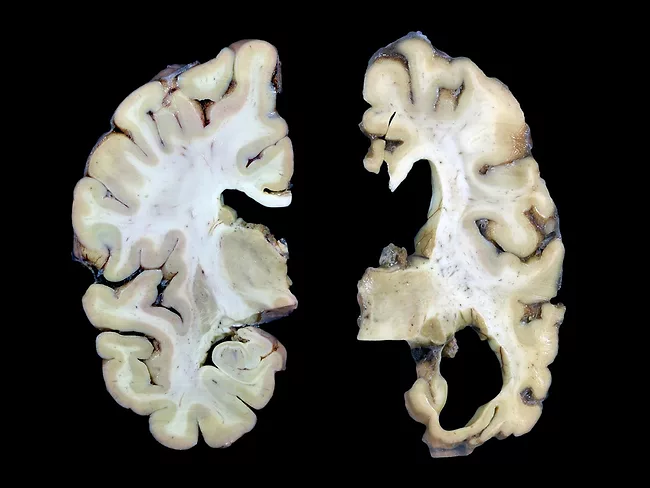
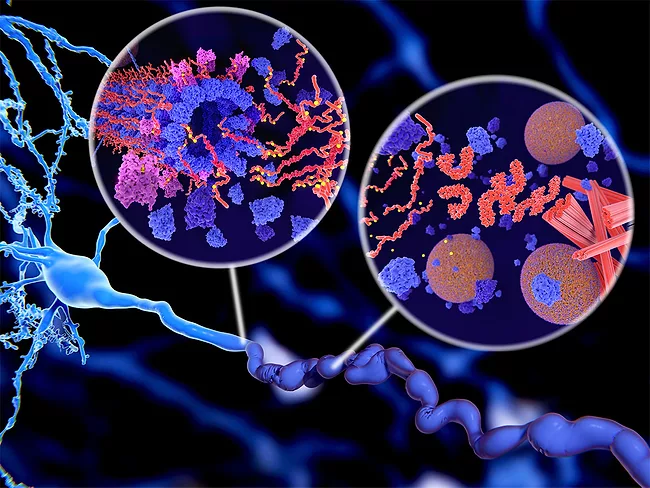
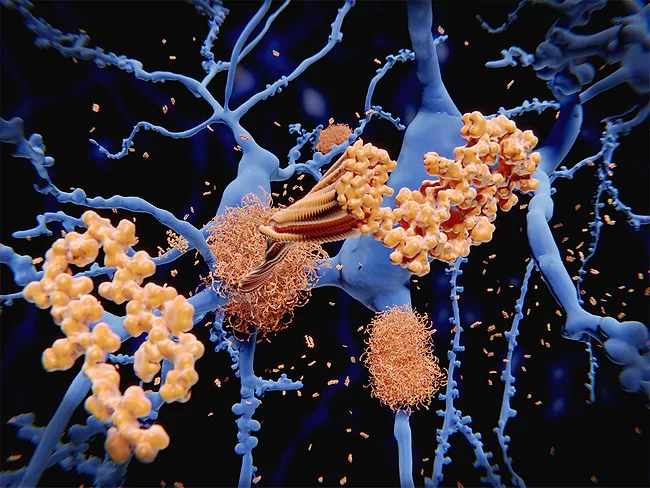
In a recent study, researchers from Washington University School of Medicine and collaborators analyzed cross-sectional blood samples to identify circRNAs associated with Alzheimer’s disease (AD) clinical status, amyloid-β and tau stages, and progression to symptomatic AD.
The majority of epilepsies are developmental disorders that start in childhood. But there is a large minority that starts in late adulthood. And increasingly, researchers are suspecting that such epilepsies share mechanisms with dementia. Summarizing the highlights of epilepsy research presented at the recent Annual Congress of the European Academy of Neurology (EAN), Aleksandar Ristic told his audience that the biggest epilepsy story out of the Congress was “not a drug, but it was a reframing.”
In Alzheimer’s disease (AD), 17β-HSD10 and CDK5/p25 contribute to neuronal dysfunction through distinct but interconnected pathways involving mitochondrial impairment and tau-mediated neurodegeneration, supporting their potential as complementary therapeutic targets.
Alturos Therapeutics BV has advanced its lead candidate, ALT-0135, into IND-enabling studies. Alturos is targeting the earliest toxic triggers in Alzheimer’s disease, particularly protein oligomers that drive synaptic loss and neuronal death.
Cenna Biosciences Inc. has obtained IND clearance from the FDA for 8M2D, a first-in-class peptide for the treatment of Alzheimer’s disease. A phase Ia/Ib trial of 8M2D in healthy volunteers and patients with early Alzheimer’s disease is expected to begin dosing late this year.
Acumen Pharmaceuticals Inc. has nominated ACU-301 and ACU-401 as development candidates in its Enhanced Brain Delivery (EBD) program as treatments for Alzheimer’s disease.
Elixiron Immunotherapeutics Inc. announced positive interim open-label phase II Alzheimer’s disease (AD) study findings of enrupatinib, an oral brain-penetrant colony-stimulating factor 1 receptor inhibitor, with plans to move the asset into a biomarker-based and placebo-controlled study.
Elixiron Immunotherapeutics Inc. announced positive interim open-label phase II Alzheimer’s disease (AD) study findings of enrupatinib, an oral brain-penetrant colony-stimulating factor 1 receptor inhibitor, with plans to move the asset into a biomarker-based and placebo-controlled study.
Two companies with European ties signed billion-dollar deals with large pharma firms in the last two days to discover and develop molecular glue drugs, as well as to advance a preclinical Alzheimer’s disease prospect. For both companies, the up-front payments are relatively small, only $10 million for Alzecure Pharma AB, and just $40 million for Orionis Biosciences Inc. But it’s the back-end milestone amounts that are headline-grabbing.
Flobiotech GmbH has signed an agreement with UCLA Health to advance a novel class of therapeutics targeting biologically validated protective pathways in neurodegeneration.