Vanda Pharmaceuticals Inc. and Olipass Corp. have entered into a research and development collaboration agreement to jointly develop a set of antisense oligonucleotide (ASO) molecules based on Olipass' proprietary modified peptide nucleic acids.
It failed to meet the primary endpoint at six months, but the European chief investigator for Biogen Inc.’s phase III trial of tofersen in treating amyotrophic lateral sclerosis (ALS) now describes the study as “trailblazing,” following a six-month open label extension.
A study published in Nature Communications revealed a new antisense oligonucleotide therapy applicable to the W1282X mutation of the cystic fibrosis transmembrane conductance regulator gene in cystic fibrosis.
Following another failure in amyotrophic lateral sclerosis (ALS), Biogen Inc. will discontinue its development of antisense oligonucleotide BIIB-078 with partner Ionis Pharmaceuticals Inc. The stumble is part of a mega-collaboration the two companies began 10 years ago that has also yielded a lot of success, including the blockbuster Spinraza (nusinersen).
After struggling in the past year, Ionis Pharmaceuticals Inc. will collaborate with Astrazeneca plc to develop eplontersen for treating transthyretin amyloidosis, which is systemic, progressive and fatal. At stake for Ionis is $2.9 billion in potential sales-related milestone payments.
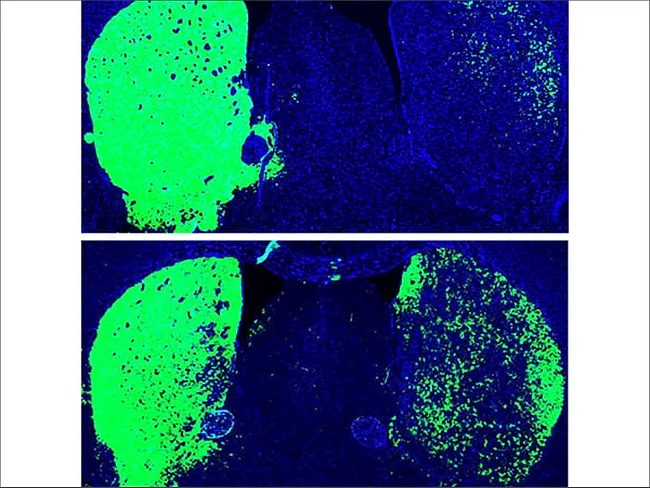
A Japanese study has discovered a new means of regulating endogenous gene expression in the CNS, using systemically administered antisense oligonucleotides (ASOs) in rodents, which facilitates development of ASO-based therapies for patients with neurological diseases requiring prolonged treatment.
The neurodevelopmental disorder MECP2 duplication syndrome (MDS) is caused by duplications spanning the methyl-CpG binding protein 2 gene (MECP2) locus, and researchers have shown that the MDS-like phenotype can be reversed in adult symptomatic mice using MECP2-specific antisense oligonucleotides (MECP2-ASOs).
Shares of Ionis Pharmaceuticals Inc. (NASDAQ:IONS) fell 21.7% to $43.59 on March 23 after its longtime partner, Roche Holding AG, decided to stop dosing the antisense oligonucleotide tominersen in a global phase III manifest Huntington's disease (HD) study. Roche subsidiary Genentech Inc. said the move was based on an independent data monitoring committee's preplanned assessment of the drug's risk-benefit profile.
"RNA was long thought to be an 'undruggable' target for small molecules, because most cellular RNAs have extensive secondary structure, but only limited tertiary structure," Matthew Disney told BioWorld Science.
Two separate groups have recently shown that in mouse models, inactivation of a single gene was enough to directly convert other cell types in the brain into neurons.