As part of a U.S. FDA evaluation of confirmatory trials for anti-PD-1/PD-L1 antibodies, the agency’s Oncologic Drugs Advisory Committee (ODAC) is being asked this week to consider whether three blockbuster biologics should continue to be available for certain cancer indications for which they received accelerated approval. At question is whether the data from the confirmatory trials for the Roche Group’s Tecentriq (atezolizumab), Merck & Co. Inc.’s Keytruda (pembrolizumab) and Bristol Myers Squibb Co.’s Opdivo (nivolumab) has proved sufficient benefit in particular indications and, if not, whether alternative or ongoing trials could do so.
LONDON – C4X Discovery Holdings plc has out-licensed its preclinical oral interleukin-17 (IL-17) inhibitor to Sanofi SA in a potential €414 million (US$493.4 million) deal. Under the terms of the agreement, Sanofi is paying €7 million up front and a further €11 in short-term preclinical milestones, with the balance to follow on reaching development, regulatory and commercialization milestones.
Citing the limited data for CAR T therapies in treating multiple myeloma, the Institute for Clinical and Economic Review said their cost-effectiveness for some patients will depend on whether a second dose is needed.
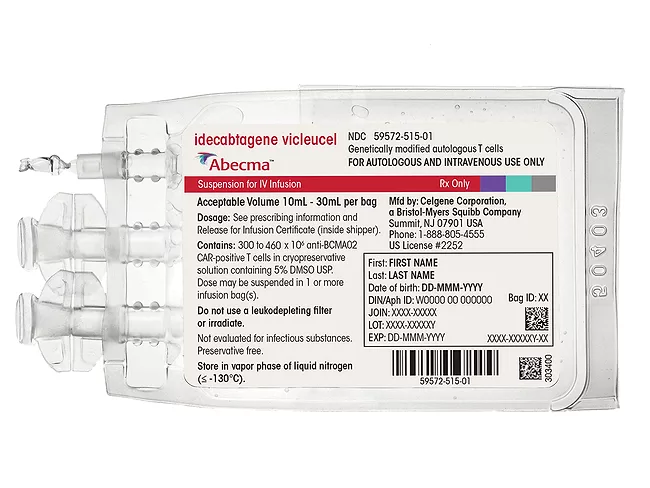
The first BCMA-targeted CAR T therapy, idecabtagene vicleucel, cleared FDA approval for use in adults with multiple myeloma (MM) who have received four or more prior lines of therapy. Developed by partners Bluebird Bio Inc. and Bristol Myers Squibb Co., the drug, branded Abecma, is also the first CAR T drug indicated for MM. It is designed for use as a one-time infusion, with a recommended dose range of 300 to 460 x 106 CAR-positive T cells. The personalized therapy will be produced at BMS’ cellular manufacturing facility in Summit, N.J. Bluebird developed the lentiviral vector used in Abecma.
Oncology drugs that have racked up a number of indications through accelerated approvals are losing some of those indications as the result of an FDA industrywide evaluation of confirmatory trials that didn’t back up the approvals.
As the March 27 PDUFA date nears for idecabtagene vicleucel (ide-cel, also known as BB-2121), the B-cell maturation antigen (BCMA)-directed chimeric antigen receptor CAR T-cell therapy from Bristol Myers Squibb Co. and Bluebird Bio Inc., investors are looking with increased favor on the approach.
Aside from its place in the history books as a global pandemic that nearly locked down the world, COVID-19 could have a lasting, more positive legacy of finally opening U.S. biopharmaceutical clinical trials to greater diversity.
Molecular Templates Inc., of Austin, Texas, has signed an R&D collaboration with Bristol Myers Squibb Co. (BMS) worth $70 million up front and potential development, regulatory and sales milestone payments of up to $1.3 billion. Molecular Templates will work on therapies designed for unnamed oncology targets to kill targeted cells by forcing receptor internalization, delivering payloads and enzymatically inactivating ribosomes.
HONG KONG – Ono Pharmaceutical Co. Ltd. has agreed to pay Ribon Therapeutics Inc. as much as ¥15.4 billion (US$147.3 million) for exclusive rights to develop and commercialize the company’s phase I PARP7 inhibitor RBN-2397 for the treatment of solid tumors in Japan, South Korea, Taiwan and ASEAN countries.