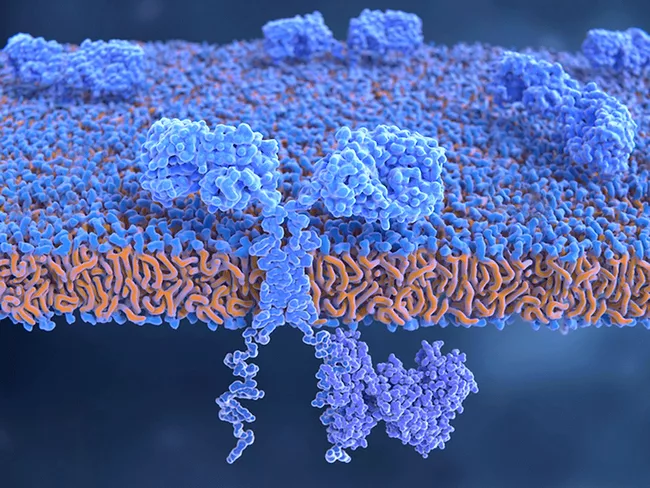
LONDON – “I really believe we can start using the word cure,” said the pioneer of chimeric antigen receptor T-cell (CAR T) therapy Carl June, as he revealed two leukemia patients he treated in a phase I trial have now been in remission for 10 years. Both patients with chronic lymphocytic leukemia achieved complete remission shortly after treatment in 2010. The genetic modification has remained detectable in their CAR T cells for more than 10 years of follow-up, June said, describing details of the case studies published in Nature Feb. 2.
LONDON – “I really believe we can start using the word cure,” said the pioneer of chimeric antigen receptor T-cell (CAR T) therapy Carl June, as he revealed two leukemia patients he treated in a phase I trial have now been in remission for 10 years. Both patients with chronic lymphocytic leukemia achieved complete remission shortly after treatment in 2010. The genetic modification has remained detectable in their CAR T cells for more than 10 years of follow-up, June said, describing details of the case studies published in Nature Feb. 2.
Bristol Myers Squibb Co.’s Breyanzi (lisocabtagene maraleucel) CAR T-cell therapy has passed muster with European regulators as a therapy for relapsed or refractory large B-cell lymphoma, setting up a likely European marketing authorization in the coming weeks.
With data due the first half of this year from the phase III trial testing Opdivo (nivolumab, Bristol Myers Squibb Co.) plus Nektar Therapeutics Inc.’s bempegaldesleukin (bempeg) in metastatic melanoma, the possibilities for engineered cytokines such as the latter remain alluring in many quarters.
At least one biopharma company is under the magnifying glass in a U.S. Senate Finance Committee investigation into large multinational corporations that shift profits overseas to avoid U.S. taxes.
Century Therapeutics Inc.’s $3.25 billion deal with Bristol Myers Squibb Co. (BMS) was the largest of four billion-dollar-plus agreements announced Dec. 10, piggybacking on a busy week that includes the start of the 40th annual J.P. Morgan Healthcare Conference.
Following initial approvals for rheumatic diseases, Bristol Myers Squibb Co.'s Orencia (abatacept) has become the first FDA-approved drug for the prevention of acute graft-vs.-host disease (aGVHD), in combination with calcineurin inhibitors and methotrexate, both types of immunosuppressants.
DUBLIN – Immatics NV is banking $150 million up front and could earn up to $770 million more in development, regulatory and commercial milestones from a licensing deal with Bristol Myers Squibb Co. involving IMA-401, its lead bispecific engineered T-cell receptor (TCR).
There was no slowing of biopharma innovation in 2021, even as industry directed significant resources to, while feeling the impact of, the ongoing COVID-19 pandemic. The year saw big wins for developers of DNA vaccines and biosimilars, while CAR T expanded its reach and a drug target once considered undruggable was finally conquered. And as 2021 gives way to 2022, other potentially game-changing technologies and therapeutics are waiting in the wings.
Bristol Myers Squibb Co. has completed a $20 million equity investment in Compugen Ltd., part of an ongoing expansion a collaboration between the companies to combine their medicines for the potential benefit of patients with solid tumors.