In a study from the PHOSP-COVID and ISARIC-4C consortia in the U.K., researchers have discovered inflammatory processes taking place during what is termed “long COVID.” Long COVID is defined by the World Health Organization (WHO) as the continuation or development of new symptoms for 3 or more months after the initial SARS-CoV-2 infection. It is estimated that 1 in 10 SARS-CoV-2 infections results in long COVID, thus affecting about 65 million people worldwide.
Before formally introducing legislation to spur R&D of treatments for long COVID, the U.S. Senate Health, Education, Labor and Pensions Committee is calling for stakeholder input on the proposal that would require $10 billion in dedicated, mandatory NIH funding to respond to the chronic condition over the next 10 years.
The biological processes giving rise to the central nervous system symptoms of long COVID remain a mystery. But multiple studies suggest they do not appear to be a result of a direct viral infection of brain tissue. The latest such research, which appeared online in Nature Neuroscience on Feb. 16, 2024, demonstrated that local immune response in brain tissues persisted long after SARS-CoV-2 virus had disappeared.
The biological processes giving rise to the central nervous system symptoms of long COVID remain a mystery. But multiple studies suggest they do not appear to be a result of a direct viral infection of brain tissue. The latest such research, which appeared online in Nature Neuroscience on Feb. 16, 2024, demonstrated that local immune response in brain tissues persisted long after SARS-CoV-2 virus had disappeared.
Researchers at ETH Zurich have identified a proteomic signature that could recognize long COVID six months after acute infection. Biologically, the signature indicated that the complement system remained active in patients with long COVID six months after infection. Translationally, it could lead to a diagnostic test for long COVID, and suggests that targeting the complement system could be a therapeutic approach to prevent or treat the disorder.
Researchers at ETH Zurich have identified a proteomic signature that could recognize long COVID six months after acute infection. Biologically, the signature indicated that the complement system remained active in patients with long COVID six months after infection. Translationally, it could lead to a diagnostic test for long COVID, and suggests that targeting the complement system could be a therapeutic approach to prevent or treat the disorder.
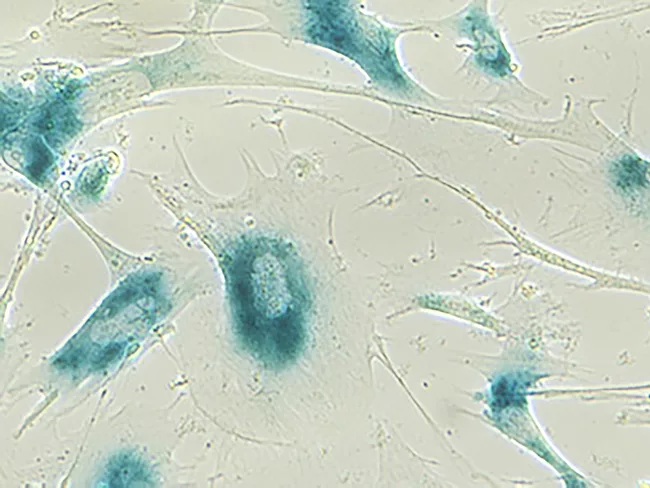
Researchers from the University of Queensland discovered that senolytic therapies can suppress long-COVID neuropathology and long-term disorders caused by viral infections by reducing senescent cells, thereby reducing inflammation. Published Nov. 13, 2023, in Nature, the study examined the use of human pluripotent stem cells to generate small mini human brain organoids to screen for antiaging interventions called senolytics that selectively eliminate senescent cells that accumulate with age, lead author Julio Aguado told BioWorld.
Blood biomarkers have been found in patients hospitalized with acute COVID-19 that are predictive of the cognitive defects of long COVID. Post COVID-19 deficits in cognition, including brain fog, are common and debilitating. They are also clinically complex, with both objective and subjective components. In the U.K., one in eight patients received their first ever neurological or psychiatric diagnosis within six months following COVID-19.
A study from Weill Cornell Medicine and The Jackson Laboratory has described the epigenetic mark SARS-CoV-2 left on immune system stem cells in the most severe cases of COVID-19 early in the pandemic, before the development of vaccines. In their work published in Cell on Aug. 18, 2023, the researchers presented a new methodology to analyze the epigenetic changes in monocytes and circulating hematopoietic stem and progenitor cells (HSPCs) that give rise to monocytes. That allowed corresponding author Steven Josefowicz and his colleagues to see if there were already changes induced by COVID-19 before HSPCs differentiated into monocytes.
Recruitment underway for Toronto-based Vielight Inc. has commenced recruitment for a clinical trial in the U.S. to study how brain stimulation photobiomodulation (PBM) might mitigate long-term cognitive impairment from long Covid. The study intervention comes on the heels of Canadian approval of a device to treat the acute version of Covid, involving light emitting diodes (LEDs) placed inside the nasal cavity and on the chest to deliver near infrared (NIR) light to the body.