The queue of lawsuits challenging the constitutionality of the U.S. Inflation Reduction Act’s (IRA) prescription drug price negotiations continues to grow. Novartis AG is the latest drug company, but probably not the last, to join the line. It filed its challenge in federal court in New Jersey Sept. 1, a few days after the Centers for Medicare & Medicaid Services included the company’s heart failure drug, Entresto (sacubitril and valsartan), on its list of the 10 drugs subject to the first round of IRA negotiations.
Molecular glue degraders are compounds intended to prompt the degradation of E3 ubiquitin ligases by engaging and modifying their surface. Molecular glue-induced protein degradation is considered an emerging strategy in drug discovery.
Gilead Sciences Inc. and Novartis AG have jointly reported pyrazolopyridinone compounds potentially useful for the treatment of herpes virus infections.
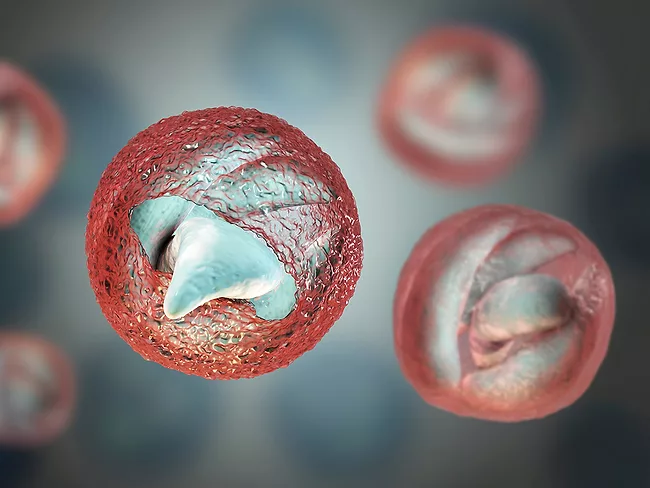
Cryptosporidiosis is a parasitic infection caused by Cryptosporidium where infected individuals develop profuse watery diarrhea and enteric symptoms such as abdominal pain. In immunocompromised or malnourished children, the infection may become chronic and lead to significant morbidity and mortality rates.
Biosimilars continue to pose cheaper alternatives to their established, blockbuster counterparts. The U.S. FDA has approved Tyruko (natalizumab-sztn) from Sandoz Inc., the generics business of Novartis AG. It is the first approved biosimilar to Biogen Inc.’s blockbuster Tysabri (natalizumab), an injectable monoclonal antibody for treating adults with relapsing forms of multiple sclerosis (MS).
Novartis AG has identified spirocyclic piperidinyl derivatives acting as complement factor B (CFB) inhibitors reported to be useful for the treatment of age-related macular degeneration (AMD), diabetic retinopathy and eye disorders.
There have been no signs of liver damage with Novartis AG’s oral Bruton’s tyrosine kinase (BTK) inhibitor remibrutinib for treating chronic spontaneous urticaria, top-line results from two phase III trials show, suggesting that faith in the faltering BTK space could be restored.
Hangzhou and New Jersey-based cancer biotech Adlai Nortye Ltd. – formerly Hangzhou Nuotai Pharmaceutical Co. Ltd. – announced plans to list on Nasdaq with its U.S. IPO filed on July 27.
Positive top-line phase II results caused Mymd Pharmaceuticals Inc.’s stock (NASDQ:MYMD) to surge 31.8% on July 31 to close at $1.45 per share. The data behind the push were for MYMD-1 (isomyosmine) for treating chronic inflammation associated with sarcopenia.
Hangzhou and New Jersey-based cancer biotech Adlai Nortye Ltd. – formerly Hangzhou Nuotai Pharmaceutical Co. Ltd. – announced plans to list on Nasdaq with its U.S. IPO filed on July 27.