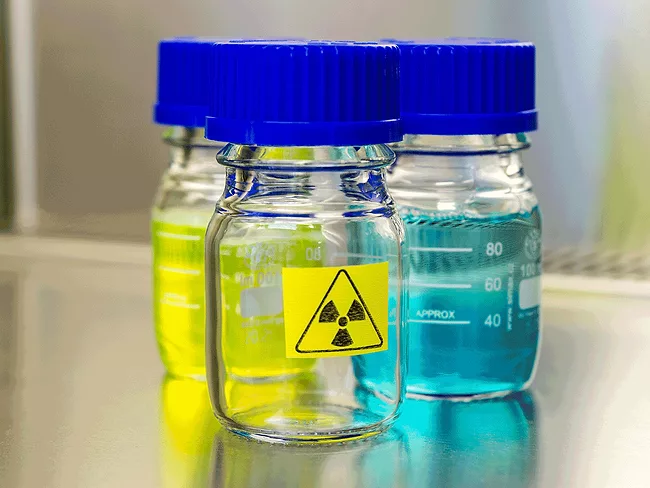
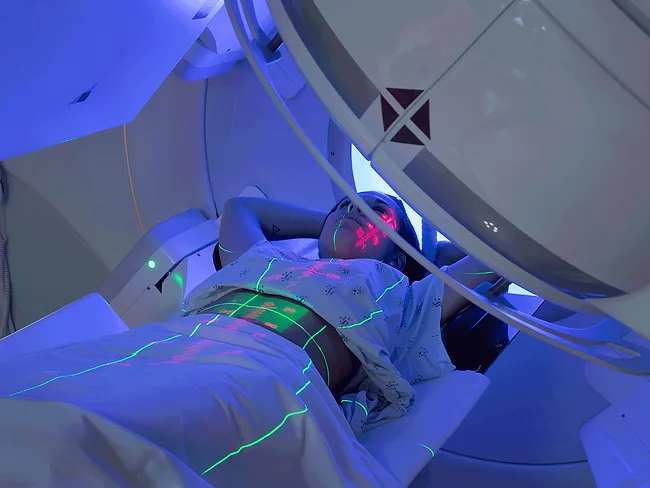
The big idea behind radiopharmaceuticals is taking the hallmarks of two cancer therapies – radiology and chemotherapy – and merging them, and this is what makes the technology a disrupter.
U.S. lawmakers have been busy writing to government agencies demanding answers and explanations on a range of issues, including drug shortages, gain-of-function research and thickets of duplicative patents that extend patent protection well beyond 20 years for some prescription drugs.
After Novartis AG decided not to take it forward in-house, the U.S. National Institute on Drug Abuse is to fund phase III development of mavoglurant in the treatment of cocaine abuse disorder. The agreement to back a trial involving up to 330 participants is with Stalicla SA, which in-licensed the glutamate receptor antagonist from Novartis earlier this year.
Are deals such as M&As between biotechs and big pharma becoming a thing of the past? That was a key question posed during the opening keynote at this year’s BIO-Europe Spring conference in Basel, Switzerland. Although Susanne Kreutz, global head of corporate and business development of Basel-based Novartis AG, doesn’t think this is the case, she told delegates that she believes M&A will increasingly focus in on “high-quality, high-impact, late-stage assets, where reimbursement is securable and where regulatory paths appear.”
Confo Therapeutics NV is banking an up-front payment of $40 million from a licensing deal with Eli Lilly and Co. involving its lead asset, CFTX-1554, an oral inhibitor of the angiotensin II type 2 receptor, which is in phase I development for neuropathic pain. The deal includes up to $590 million more in potential milestones and tiered sales royalties. Ghent, Belgium-based Confo could also secure a further $590 million in additional milestones should Indianapolis-based Lilly elect to take forward an antibody-based inhibitor directed against the same target.
Citing federal preemption, the U.S. Court of Appeals for the First Circuit tossed multidistrict litigation (MDL) involving GSK plc’s labeling of Zofran, an antiemetic approved for postoperative use and in conjunction with chemo or radiation, but that is commonly used off-label in pregnancy.