From Roche Holding AG to Novartis AG, bad news abounds for anti-TIGIT immunotherapies. In an SEC filing on July 11, Chinese oncology R&D firm Beigene Ltd. and Basel, Switzerland-based Novartis announced an end to their $1 billion deal to develop the former’s TIGIT immunotherapy ociperlimab, with the checkpoint inhibitor going back to Beigene.
Novartis AG has described pyridine-3-carboxylate compounds acting as voltage-dependent L-type calcium channel subunit α-1C channel (Cav1.2) activators reported to be useful for the treatment of schizophrenia, major depression, attention deficit hyperactivity disorder, autism spectrum disorder, multiple sclerosis, frontotemporal dementia, Alzheimer’s disease and Brugada syndrome.
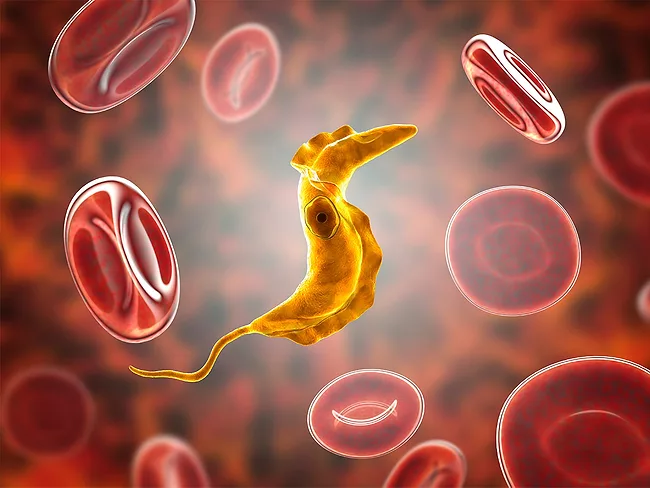
Parasitic diseases caused by trypanosomatid protozoa have long been treated with traditional methods. However, the effectiveness of current treatments for leishmaniasis is limited. Some are toxic, or have been abandoned, such as in the cases of Chagas disease and human African trypanosomiasis (HAT), commonly known as sleeping sickness.
Just over a month after scoring U.S. FDA clearance for dry eye disease therapy Miebo (perfluorohexyloctane), Bausch + Lomb Corp. is adding Xiidra (lifitegrast) to its arsenal in the same indication as part of the potential $2.5 billion deal with Novartis AG, which is divesting its “front-of-eye” ophthalmology assets.
Having raised HK$791 million (US$101 million) through an IPO in Hong Kong, Laekna Inc., which develops therapies for cancer and liver fibrosis, now plans to focus on further developing its two lead products in-licensed from Novartis and push its pipeline of 14 products forward.
Novartis AG has synthesized naphthyridinone derivatives acting as K(ir) 3.1/3.4 (GIRK1/4; KCNJ3/5) IKACh channel blockers reported to be useful for the treatment of bradyrhythmic arrhythmia, bradycardia, atrial fibrillation, heart block, hypotension, primary aldosteronism, sick sinus syndrome and vasovagal syncope, among others.
After almost 30 years in business, Sangamo Therapeutics Inc. is finally nearing a BLA filing for one of its programs. But the company, wounded by the recent loss of alliances with Biogen Inc. and Novartis AG, is also running out of cash and investor interest – and it badly needs a new deal to stay afloat.
On a quest to boost its renal diseases pipeline with two late-stage drugs, Novartis AG has announced plans to acquire precision medicines drug developer Chinook Therapeutics Inc., offering up to $3.5 billion. The move drove Chinook’s shares (NASDAQ:KDNY) up by 58.3%, or $13.99, on June 12, closing at $37.98.
Novartis AG has identified diaminocyclopentylpyridine derivatives acting as proprotein convertase subtilisin/kexin-type 9 (PCSK9) inhibitors and thus reported to be useful for the treatment of hypercholesterolemia, hyperlipidemia, hypertriglyceridemia, sitosterolemia, vascular inflammation, atherosclerosis, peripheral vascular and coronary heart disease, among others.