Keeping you up to date on recent developments in cardiology, including: What is causing COVID-19 blood clots?; Using machine learning to predict survival rates with OHCA; Remote cardiac rehabilitation proves itself.
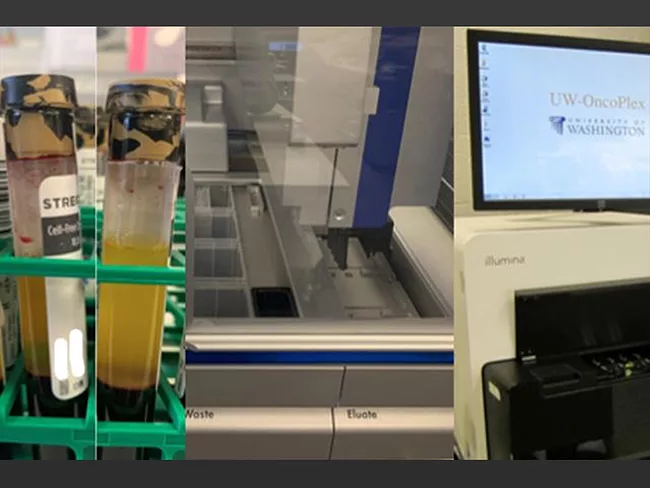
The use of liquid biopsies, tests that look for variants in cell-free DNA (cfDNA) shed by tumors into blood plasma, could lead to misdiagnosis and inappropriate treatment in many cancers, according to University of Washington researchers. The tests misidentified a noncancer mutation that is particularly common in older people as a mutation used as a biomarker for PARP inhibitors indicated for use in prostate cancer, a study published in JAMA Oncology found, but the problem likely extends to other malignancies.
Keeping you up to date on recent developments in neurology, including: AI helps detect brain aneurysms on CT angiography; BBB studies advancing focused ultrasound treatment for Parkinson’s; Study reveals unexpected protective role for brain swelling after injury.
Keeping you up to date on recent developments in diagnostics, including: Deep learning enables real-time prediction of acute kidney injury; Catching kidney injury early in children; Seeing where tau goes wrong.
Investigators at the National Institute of Allergy and Infectious Diseases have identified physiological factors that are not diseases in the narrow sense, but that nevertheless have large effects on microbiome composition.
Keeping you up to date on recent developments in orthopedics, including: New opportunities for detecting osteoporosis; Brazilian researchers discover how muscle regenerates after exercise; Different outcomes by race/ethnicity among patients with COVID-19 and rheumatic disease.
Keeping you up to date on recent developments in oncology, including: Microfluidic provides model for testing therapies on pancreatic ductal adenocarcinoma; Cutting off AML’s metabolic escape route; NGF: PDAC’s VEGF?; Revving up cisplatin by targeting Rev7.
Keeping you up to date on recent developments in cardiology, including: Mobile smartphone tech tied to better clinical outcomes for OHCA; Lung scans for earlier COVID-19 detection; Cholesterol meds affects the organs differently.
Under the right circumstances, a single mouse can be as good as a group of eight or 10 animals in predicting whether a tumor will respond to a drug, researchers reported at the 2020 EORTC-NCI-AACR (ENA) Molecular Targets meeting on Saturday. The single-animal approach “allows incorporation of more tumor models within the same resource constraints,” Peter Houghton told reporters at a press conference previewing ENA highlights.
Keeping you up to date on recent developments in neurology, including: Software developed to objectively calculate white matter hyperintensities; CSF biomarkers point to underlying cause of neural damage in COVID-19; Scientists discover how cryptochrome mutation leads to sleep disorder; Physical labor significantly increases the risk of dementia.

 RSS
RSS