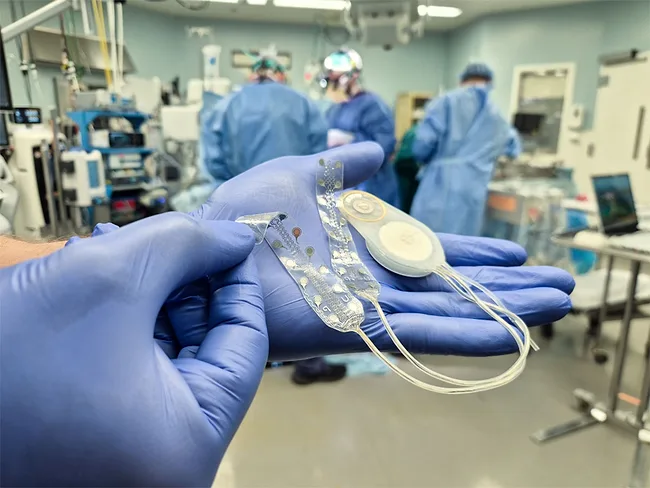
Deep brain stimulation (DBS) through implanted electrodes has enabled fundamentally new ways of treating certain disorders. More than 100,000 severely ill patients have received an implant to treat Parkinson’s disease, which is DBS’ greatest success story.
Samsung Bioepis Co. Ltd. announced positive top-line phase I and phase III data for SB-27, a proposed biosimilar to Merck & Co. Inc.’s blockbuster immunotherapy Keytruda (pembrolizumab). Preliminary analysis of parallel-run global phase I and phase III studies demonstrated SB-27’s clinical and pharmacokinetic (PK) equivalence to the reference product, according to a company announcement.
Samsung Bioepis Co. Ltd. announced positive top-line phase I and phase III data for SB-27, a proposed biosimilar to Merck & Co. Inc.’s blockbuster immunotherapy Keytruda (pembrolizumab). Preliminary analysis of parallel-run global phase I and phase III studies demonstrated SB-27’s clinical and pharmacokinetic (PK) equivalence to the reference product, according to a company announcement.
Ready or not, the future has arrived. Novel AI and brain-computer interface (BCI) systems are no longer confined to the realm of science fiction. As an increasingly intertwined human-machine model moves closer to adoption in real-world clinical and military practice, technological advances are sparking concerns over public health, ethics and national security.
BioWorld tracked 262 clinical trial readouts across phases I through III in May 2026, the highest monthly total so far this year and well above April’s 143, March’s 209, February’s 152 and January’s 144. By phase, BioWorld recorded 98 phase I readouts in May, 81 in phase II and 83 in phase III. Of the phase III programs, 17 trials posted positive results, and one failed to meet its primary endpoints.
Otsuka Pharmaceutical Co. Ltd. reported another clinical study win with once-daily centanafadine, a non-stimulant compound targeting attention deficit hyperactivity disorder (ADHD). Top-line results of a dedicated phase IIIb study in patients with ADHD and comorbid anxiety found that centanafadine met the primary endpoint, defined as score improvements on the Adult Investigator Symptom Rating Scale, compared with placebo at week 8.
Nature Medicine has retracted a widely publicized Chinese lung cancer study that suggested administering immunotherapy before 3 p.m. could dramatically improve survival in a decision that comes amid heightened scrutiny of research integrity and data transparency in high-impact biomedical journals.
The field of BCI is continually evolving; as such, companies are increasingly highlighting the potential of their technologies to transform care. For advanced players, with fully developed BCI systems, the sector is approaching an inflection point as the technology transitions from early feasibility studies into pivotal trials. The focus now for many is on generating the long-term safety, efficacy and real-world usability data needed to support regulatory approval and broader clinical adoption.
Corxel Pharmaceuticals Ltd.’s oral small-molecule GLP-1 receptor agonist, CX-11, met the primary endpoints in a phase II trial evaluating the candidate in obese and overweight patients in the U.S., according to top-line results.
Neither of Cynata Therapeutics Ltd.’s pivotal trials for its Cymerus stem cell platform met the primary endpoints, with no statistically significant differences between active and control groups on primary or key secondary efficacy measures, CEO Kilian Kelly told investors during a June 22 conference call.
 RSS
RSS