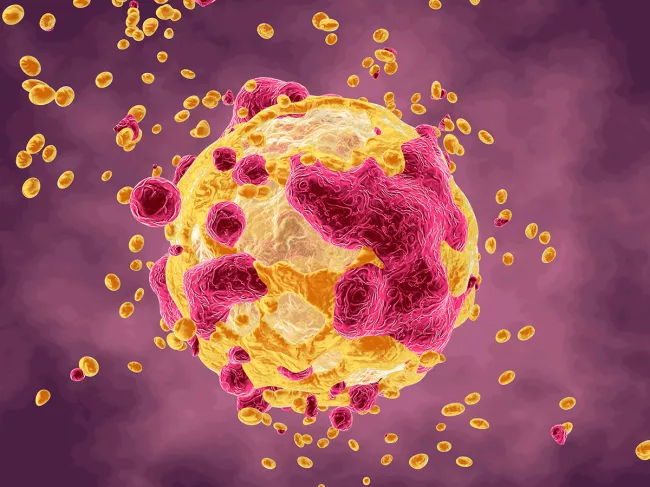
Researchers from the University of Zaragoza and Promontory Therapeutics Inc. have discovered that PT-112, which has a multimodal mechanism of action, could have different clinical applications in cancer treatment due to its effects on mitochondria in castration-resistant prostate cancer (CRPC). PT-112 is an immunogenic small molecule currently in phase II development in metastatic castration-resistant prostate cancer (mCRPC). The researchers designed PT-112 to target advanced solid tumors, such as thymus, small-cell, non-small-cell lung or CRPC.
South Korea’s regenerative medicine market is expected to grow from $51 million in 2016 to $320 million by 2026, growing at a compound annual growth rate of 20%, So Ra Park, chair and founder of Korea’s Regenerative Medicine Acceleration Foundation said.
Diwali, the Festival of Light, marks different events depending on where it is celebrated. In some areas of India, it marks the return of Lord Rama to his birthplace of Ayodhya after defeating the demon Ravana.
Dystroglycanopathies are a subset of rare congenital muscular dystrophies (CMDs) caused by dysregulation in the assemblage of glycans on the α-dystroglycan (α-DG) transmembrane glycoprotein.
Recent findings have unveiled some integrins are associated with Mendelian conditions. In a recent study, researchers directed efforts toward studying integrin-beta 8 (ITGB8) and its association with pathology, especially with neurological pathology, as none of them have been linked to neuropathology to date.
Researchers from Bridgebio Pharma Inc. presented preclinical characterization of the novel next-generation KRAS G12C GTP/GDP dual inhibitor candidate, BBO-8520, being developed for the treatment of cancer.
Researchers from Bayer AG presented the discovery of BAY-2927088, a new noncovalent tyrosine kinase inhibitor targeting EGFR exon 20 insertions and C797S resistance mutations in non-small-cell lung cancer (NSCLC).
Targeting TEAD with small-molecule inhibitors is an emerging therapeutic strategy for YAP/TAZ-dependent human cancers with Hippo pathway alterations. Bridgene Biosciences Inc. identified three hits with the Isobaric Mass Tagged Affinity Characterization (IMTAC) screening platform that covalently bound to TEAD1 with the binding site being cysteine 359, which led to the BGI-9004 compound.
Biogen Inc. presented new data showing how applying artificial intelligence (AI), machine learning (ML) and radiomics can produce actionable insights on multiple sclerosis (MS) disease progression. The results, released at this week’s European Committee for Treatment and Research in Multiple Sclerosis (ECTRIMS) Congress, could help to advance new digital health tools to improve monitoring and quality of life of MS patients.

 RSS
RSS