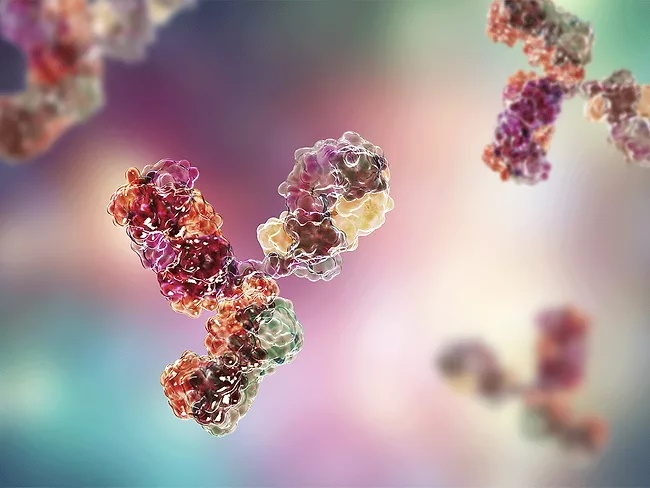
Systimmune Inc. and Bristol Myers Squibb Co. have joined hands in a co-development deal for bispecific antibody drug conjugate (ADC) BL-B01D1 in a deal worth up to $8.4 billion. The deal falls on the heels of BMS acquiring Mirati Therapeutics in October 2023 for $4.8 billion to add to its oncology pipeline.
Katy Rezvani received this year’s E. Donnall Thomas Prize for her work on natural killer (NK) cells at the annual meeting of the American Society of Hematology (ASH). It was not love at first sight, though.
Biomea Fusion Inc.’s diabetes treatment produced enhanced glycemic control at week 26 courtesy of its 200-mg cohort. It’s the latest advance for the company’s candidate that also has strong prospects in treating leukemia. Top-line data from the ongoing phase II Covalent-111 study of BMF-219, a covalent menin inhibitor for regenerating insulin-producing beta cells, demonstrated that about 40% of participants, four of 11 patients, in the 200-mg cohorts showed a durable reduction, 1% or more, in the amount of blood sugar attached to the type 2 diabetes (T2D) patients’ hemoglobin. The data came from participants who had received the last dose in a four-week treatment.
Prescient Therapeutics Pty Ltd.’s PTX-100 met primary safety endpoints and showed preliminary efficacy in a phase Ib trial in patients with relapsed and refractory T-cell lymphomas that exceeded the standard of care, and the company hopes to advance to a phase II registrational study in 2024, Prescient CEO Steven Yatomi-Clarke told BioWorld.
With an initial €8 million (US$8.4 million) in seed funding in the bank, Tessellate Bio has emerged from stealth to tackle cancers that rely on the less well explored synthetic lethality mechanism of alternative lengthening of telomeres.
Injecting a combination of cisplatin and vinblastine – engineered by way of the company’s Dfuserx platform – turned out to be just the ticket for early stage breast cancer in the phase II study called Invincible conducted by Intensity Therapeutics Inc. Shares of the Shelton, Conn.-based firm (NASDAQ:INTS) closed Dec. 8 at $6.88, up $2.68, or 63%, having traded as high as $11.44, thanks to Wall Street’s satisfaction with the data testing INT230-6, which emerged during the San Antonio Breast Cancer Symposium.
Three giants have produced new phase III study data for their already approved, big name therapies. Two were positive and the third was stopped for futility.
While early stage and involving a relatively small patient population, the interim phase Ib readout from the combination cohort testing estrogen receptor (ER)-targeting candidate vepdegestrant in combination with CDK4/6 inhibitor Ibrance (palbociclib) in heavily pretreated patients with ER-positive/HER2-negative breast cancer was impressive enough to prompt partners Arvinas Inc. and Pfizer Inc. to expand development work on the program. The results also struck a chord on the Street, with shares of Arvinas (NASDAQ:ARVN) gaining 31% on the day.
South Korean pharmaceuticals Celltrion Inc. and Cyron Therapeutics Co. Ltd. are teaming up to discover and develop bispecific and trispecific antibodies, collectively called polyspecific antibodies, under the ₩1.158 trillion (US$882.38 million) joint research agreement inked on Dec. 6. Under the terms, privately held Daegu-based Cyron will discover and develop at least three polyspecific antibodies for blood and solid cancers pre-selected by Incheon-based Celltrion via Cryon’s CD-3 targeting T-cell engager platform that helps engage T cells to attack cancer cells.
The oral drug inavolisib, when added to two other therapies, significantly improved progression-free survival in the first-line phase III treatment of advanced hormone receptor-positive, HER2-negative breast cancer in which patients have a PIK3CA mutation.
 RSS
RSS