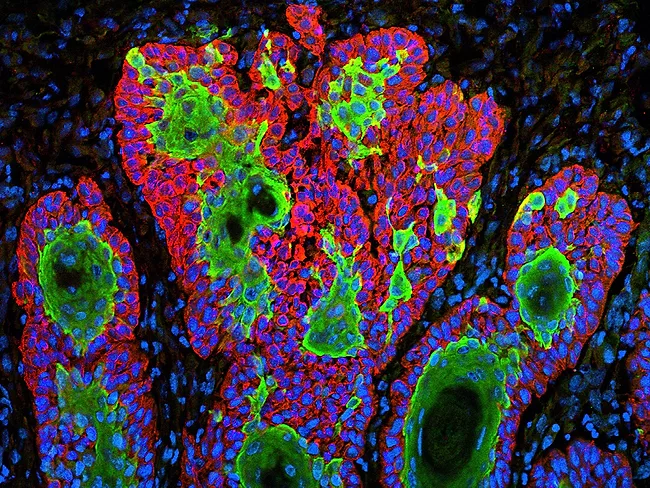
Back-to-back papers in the June 22, 2023, issue of Nature have identified separate molecular mechanisms underlying sex-specific cancer outcomes. Researchers from The University of Texas MD Anderson Cancer Center showed that increased expression of the epigenetic enzyme KDM5D, which is located on the Y chromosome, contributed to cancer progression in KRAS-mutated tumors. In the same issue of Nature, a team from Cedars-Sinai reported new insights into the consequences of losing the entire Y chromosome.
Sirnaomics Ltd. is advancing lead siRNA candidate STP-705 for the treatment of squamous cell carcinoma in situ into late-stage clinical testing after sharing encouraging phase II trial results with the U.S. FDA in an end-of-phase II meeting. The company plans to move forward in 2023 with a single-dose study as a subgroup of subjects in a large phase III study. Positive results will provide the basis for completion of this large registrational phase III trial.
Curocell Inc. is inching closer to realizing Korea’s first domestically developed CAR T therapy, presenting “encouraging” interim phase II trial results for anbalcabtagene-autoleucel at the International Conference on Malignant Lymphoma in Lugano, Switzerland.
For Jeff Galvin, the CEO and founder of newly launched Addimmune Inc., HIV is not a condition that’s in the rearview mirror. It needs a functional cure to save lives, make people healthier and save money that need not have been spent. People wonder why it’s worth bothering to cure HIV, Galvin told BioWorld, when they are taking their medications every day and they are feeling pretty close to normal. But it’s not close for Galvin, who noted that there are side effects from taking the pills that can cause headaches, fatigue, nausea and diarrhea.
Following strong phase I study data in malignant melanoma released a year ago, Ultimovacs ASA’s lead candidate, UV-1, stumbled in the phase II trial, which did not meet the primary endpoint of progression-free survival in second-line treatment of malignant pleural mesothelioma.
New and updated preclinical and clinical data presented by biopharma firms at the American Society of Clinical Oncology annual meeting, including: Amgen, Ascentage, Beyondspring, Bicara, Cohbar, Immvira, Jazz, Kite, Merck & Co., Moderna, Morphogenesis, Nascent, Neximmune, Nkgen, Oncoinvent, Oncolytics, Portage, Precigen, Promontory, Puma, Replimune, Servier, Sorrento, Sutro, Zentalis, Zymeworks.
New and updated preclinical and clinical data presented by biopharma firms at the American Society of Clinical Oncology annual meeting, including: Agenus, Akeso, Alligator, Arcus, Atara, Bold, Coherus, Dragonfly, Ellipses, Erasca, Fulgent Genetics, Galera, Gilead, Gilead Sciences, Gracell, Iaso, Immunocore, Immunogen, Immutep, Innovent Biologics, Intensity, ISA, Janssen, Kite, Linnaeus, Memgen, NEC, Precigen, Transcenta, Transgene.
When combined with chemotherapy, the PD-1 inhibitor antibody toripalimab reduced the risk of death by 37% over chemotherapy alone when used first line in patients with recurrent or metastatic nasopharyngeal carcinoma, Coherus Biosciences Inc. revealed at this year’s American Society of Clinical Oncology meeting (ASCO).
New and updated preclinical and clinical data presented by biopharma firms at the American Society of Clinical Oncology annual meeting, including: Affimed, Allogene, Amgen, Apexigen, Astrazeneca, Atreca, Bayer, Blueprint, BMS, Cantargia, Catalym, Chimeric, Cogent, Compugen, CSPC, Cyteir, Day One, Daiichi, Elevation, Elicio, Evaxion, G1, Merck & Co.
Impressive data continue to roll out for Day One Biopharmaceuticals Inc.’s tovorafenib in pediatric low-grade glioma, with results from 69 evaluable patients with relapsed or progressive disease showing a 67% overall response rate, as measured by Response Assessment for Neuro-Oncology High-Grade Glioma, in the phase II Firefly-1 trial.
 RSS
RSS