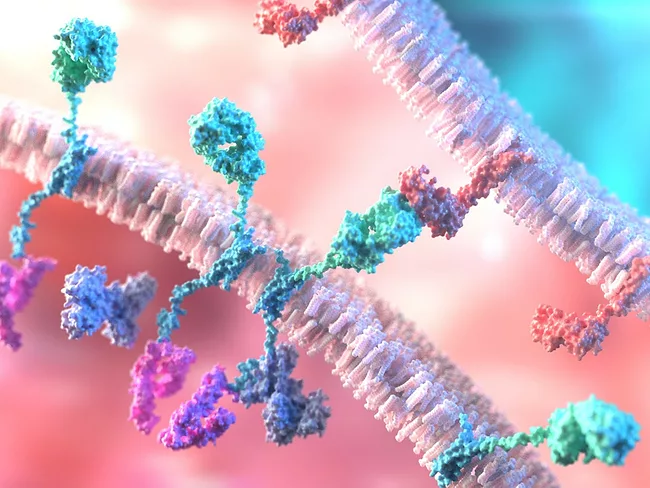
The colchicine-binding domain (CBD) of tubulin, one of the earliest identified regulatory sites, remains underexplored in oncology despite its proven success in other therapeutic areas. Drugs targeting CBD are widely used for gout, parasitic infections or actinic keratosis. However, no CBD-directed agents have reached clinical use for cancer, highlighting a significant opportunity to exploit this domain for novel anticancer strategies.
Oricell Therapeutics Holdings Ltd. announced a $70 million series C1 round to expand its global footprint and speed clinical development of its CAR T therapies. The round was co-led by Beijing Medical and Health Care Industry Investment Fund, Qiming Venture Partners and a leading global health care fund.
Hainan Simcere Pharmaceutical Co. Ltd. has described N-myristoyltransferase 1 (NMT1) and NMT2 inhibitors reported to be useful for the treatment of cancer.
Shenzhen Forward Pharmaceutical Co. Ltd. has synthesized quinazoline derivatives acting as GTPase KRAS G12C, G12D and G12V mutant inhibitors reported to be useful for the treatment of pancreatic cancer.
Swiss Rockets AG and Alloy Therapeutics Inc. have signed a master research agreement establishing a multitarget collaboration to discover and develop next-generation radioligand therapeutics (RLTs) for oncology.
Researchers from Stanford School of Medicine and Yonsei University College of Medicine reported the discovery and preclinical characterization of novel KLHDC2-mediated CDK6-selective degraders.
Dispatch Biotherapeutics Inc. has obtained IND clearance from the FDA for DISP-10, enabling the initiation of a phase I study in patients with solid tumors. Initial clinical evaluation will begin in gastrointestinal cancers, with plans to expand into multiple additional solid tumor indications following clinical proof of concept.
Antibody-drug conjugates (ADCs) are promising biotherapeutics composed of an antibody plus a cytotoxic payload via a chemical linker, thus allowing the delivery of cytotoxic payload to target cancer cells. Among cancer glycoproteins studied in cancer research, mucin-1 (MUC1) is among the most extensively researched.
The sea anemone Stichodactyla helianthus, which carpets the Caribbean seafloor, may hold the key to eliminating the senescent cells that survive cancer therapy. A collaboration led by Spanish scientists across several international research centers has discovered a new type of toxin that selectively eliminates senescent cancer cells.

 RSS
RSS