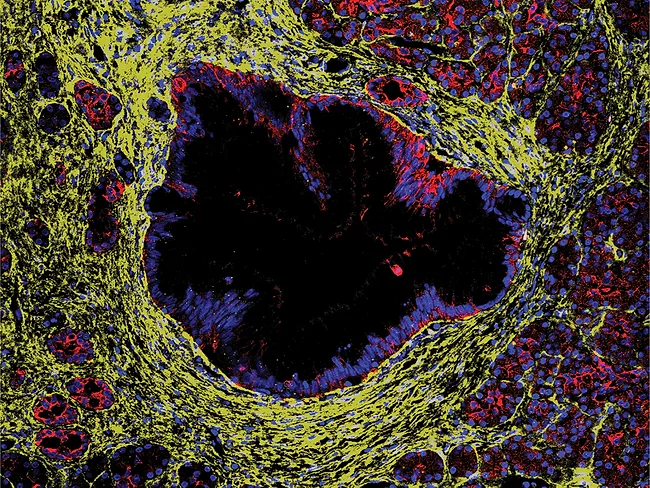
The human pancreas often contains lesions that are common in the population and that, although they can become malignant, usually do not. To understand when this occurs and how these pancreatic cancer precursor lesions, known as pancreatic intraepithelial neoplasias (PanIN), evolve, scientists at the University of Michigan analyzed their gene expression patterns and their cellular microenvironment.
Multiple updates on TROP2-directed antibody-drug conjugates (ADCs) for lung and breast cancers highlight both progress made and opportunities for improvement for the targeted class of cancer therapeutics.
Multiple updates on TROP2-directed antibody-drug conjugates (ADCs) for lung and breast cancers highlight both progress made and opportunities for improvement for the targeted class of cancer therapeutics.
Payoff for the November 2023 buyout of Immunogen Inc. came for Abbvie Inc. in the form of U.S. FDA clearance for the CD123-targeting antibody-drug conjugate Decnupaz (pivekimab sunirine) to treat adults with blastic plasmacytoid dendritic cell neoplasm (BPDCN), an ultra-rare, aggressive and quick-killing hematologic malignancy.
Hutchmed Ltd. has identified new antibody-drug conjugates (ADCs) comprising an antibody targeting EGFR (HER1; erbB1) linked to cytotoxic drug potentially useful for the treatment of cancer and autoimmune diseases.
Scinnohub Pharmaceutical Co. Ltd. has disclosed new biazacycloalkane compounds acting as menin (MEN1)/KMT2A (MLL) and/or MEN1 (M327I mutant)/KMT2A (MLL) and/or MEN1 (T349M mutant)/KMT2A (MLL) interaction inhibitors potentially useful for the treatment of cancer and diabetes.
Open Source Therapeutics Co. Ltd. has reported new nitrogen-containing heterocyclic compounds acting as poly(ADP-ribose) polymerase 1 (PARP-1; ARTD1) inhibitors potentially useful for the treatment of cancer.
Protuoso Biosciences has announced the close of an oversubscribed $9.5 million seed financing round, the proceeds of which will be used to advance its multifunctional protein engineering platform and broad pipeline across cardiometabolic, oncology and autoimmune diseases.
Reprogram Biosciences Inc., a preclinical oncology biotechnology company developing mRNA-based therapeutics to treat solid tumors, has announced the close of its seed financing, bringing the total capital raised to $6 million since the company’s founding in 2025.
 RSS
RSS