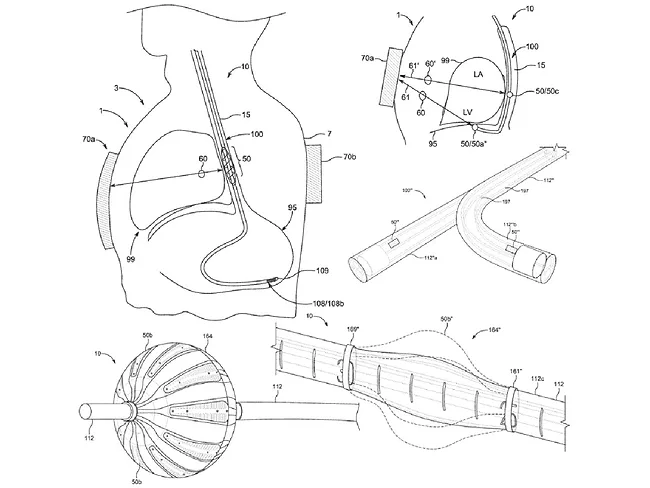
In what represents the first patenting to emerge from Endeavor Med Inc., its founder and chief executive officer, Imran Faruqi, describes their development of a novel device capable of providing non-invasive cardiac pacing, defibrillation, and cardioversion, and which uses pacing currents at less than half that required by traditional chest pads.
Novo Nordisk A/S presented a mixed bag of R&D results for its cardiometabolic assets in the first half of 2024 as it axed three drug candidates but advanced one to a late-stage study. In the search for greener pastures beyond a crowding obesity market, Novo announced Aug. 7 that it advanced ziltivekimab into a phase III study to assess the subcutaneous therapy’s cardiovascular outcomes in acute myocardial infarction patients.
Croívalve Ltd. raised $16 million in a series B financing round that will be used to fund a clinical trial in the U.S. looking at the safety and performance of its Duo system to treat patients with severe or greater symptomatic tricuspid regurgitation.
The recent €15 million (US$16.3 million) deal that Affluent Medical SAS signed with Edwards Lifesciences Inc. for its heart products does not take away from its ambitions of creating a European med-tech company, Sébastien Ladet, CEO of Affluent Medical, told BioWorld, but was part of the company’s broader strategy to expand the markets for its products.
The U.K. National Institute for Health and Care Excellence endorsed the use of testing for the CYP2C19 genotype for management of clopidogrel usage after ischemic stroke and heart attack, but the agency is specific about the use of tests by Genedrive plc and Genomadix Inc. in point-of-care settings as alternatives to lab testing.
Esperto Medical Inc. could soon offer a non-invasive method for blood pressure measurement for critically ill patients based on results seen in a study published in PNAS Nexus. Esperto’s Resonance Sonomanometry technology uses acoustic stimulation with ultrasound imaging to provide continuous, non-invasive readings.
Protembis GmbH received €20 million (US$21.66 million) in financing from the European Investment Bank to develop its cerebral embolic protection system, Protembo. The intra-aortic filter device deflects embolic material away from arteries leading to the brain during left-sided heart procedures including transcatheter aortic valve replacement.
The U.S. CMS proposed a series of changes to the Medicare series of codes for diagnostic-related groups, and device makers had pointed remarks about some of those proposals.
Draupnir Bio is poised to advance a new approach to targeted protein degradation by engaging the sortilin receptor on lysosomes to promote the destruction of extracellular and membrane-bound disease proteins.
Researchers from Edgewise Therapeutics Inc. presented preclinical data for the cardiac sarcomere modulator, EDG-7500, which is being developed for the treatment of hypertrophic cardiomyopathy (HCM) and other diseases of diastolic dysfunction.
 RSS
RSS