Eli Lilly and Co.’s buyout of Ventyx Biosciences Inc. for $1.2 billion at the start of the year brought to the forefront NLR family pyrin domain containing 3 (NLRP3) inhibitors, on which a handful of developers have been working – and research in the space continues to roll out, as with the paper published March 26 in Nature that delved into mechanisms that rev up the NLRP3 inflammasome.
Abbvie Inc. is buying exclusive rights to develop, manufacture and commercialize two Nav1.8 inhibitors for pain – HSK-55718 and HSK-51155 – from Haisco Pharmaceutical Group Co. Ltd. for $30 million up front and up to $715 million in milestone payments, plus royalties.
The development of glucagon-like peptide 1 receptor (GLP-1R) agonists, such as semaglutide and tirzepatide, has been a game changer in the clinical management of overweight and obesity, but there is interpersonal variability in efficacy of these medications for weight loss, as well as in the incidence of undesired side effects. Investigators from the 23andMe Research Institute have shed some light on how variations in the GLP-1R and GIP receptor (GIPR) genes impact their effectiveness and the occurrence of side effects.
There are new data to chew over in the ongoing controversy about obesity being diagnosed as a disease from a study tracking 157,159 participants in the UK Biobank over 13 years. This shows that even in the absence of any metabolic disturbance such as elevated lipids, high blood pressure or diabetes, there is an increased risk of heart attack, stroke, peripheral arterial disease, heart failure and liver disease in people with a body mass index over 30.
Everest Medicines Ltd. has agreed to acquire a Singapore-based commercial unit of Hasten Biopharmaceuticals (Asia) Ltd. for $150 million up front, gaining market authorization holder rights to 14 marketed products originally developed by Takeda Pharmaceutical Co. Ltd.
More than four decades on from the approval of the first biologic drug, the industry has reached a tipping point, and biotech drugs now outnumber small molecules in the global R&D pipeline.
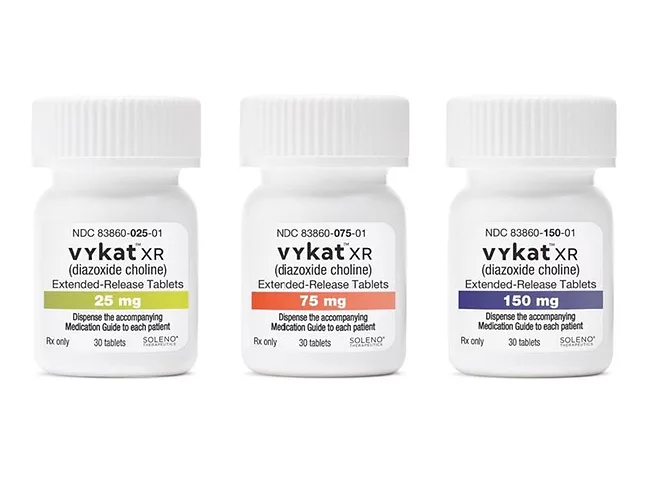
A proposal to buy out Soleno Therapeutics Inc. didn’t wait for European approval of Vykat XR (diazoxide choline) to treat hyperphagia in Prader-Willi syndrome, as Neurocrine Biosciences Inc. is putting on the table $53 per share in cash, which equates to an equity value of $2.9 billion.
Ambrosia Biosciences Inc., named after the drink of the Greek gods, secured a $100 million series B to advance its preclinical pipeline of oral obesity drugs. The startup formed after Pfizer Inc. shuttered its Boulder, Colo.-based research facility that the pharma gained through its 2019 acquisition of Array Biopharma Inc.
Eli Lilly and Co. anticipates shipping newly approved Foundayo (orforglipron) within the next week, as the drug becomes the second oral weight-loss glucagon-like peptide-1 (GLP-1) receptor agonist to enter the U.S. market following December’s approval of Novo Nordisk A/S’ Wegovy (semaglutide) pill.
Introduced last year as a pilot program, the U.S. FDA Commissioner’s National Priority Voucher (CNPV) could be here to stay – at least for the duration of Marty Makary’s tenure as FDA commissioner. Since the FDA unveiled the CNPV last June, it has welcomed 18 products from 16 companies into the “game-changer” program for patients, as Makary described it. The goal is to provide an “ultrafast review pathway,” one to two months instead of the standard 10 to 12 months, for drugs and biologics of strategic national importance while maintaining the FDA’s scientific and regulatory standards, according to the agency.
 RSS
RSS