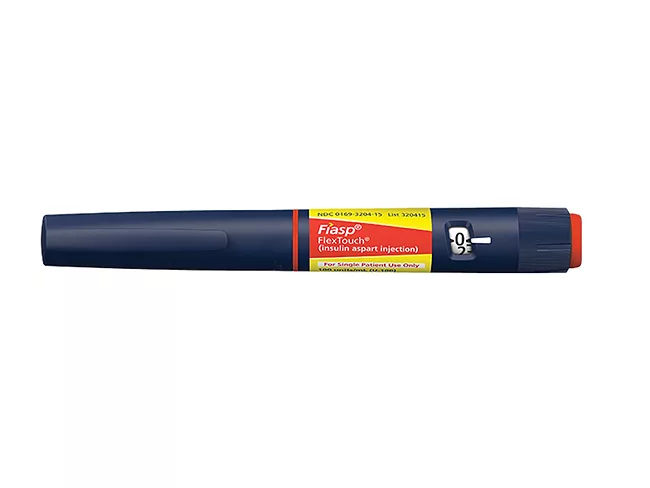
Like the federal district court before it, the U.S. Court of Appeals for the Third Circuit said it lacks jurisdiction to rule on the merits of Novo Nordisk A/S’ claim that the CMS violated the Inflation Reduction Act (IRA) when it treated six of the company’s insulin aspart products as one negotiation-eligible single-source drug.
Among severe insulin-deficient diabetes patients, 12 weeks of 100-mg, once-daily dosing of Biomea Fusion Inc.’s icovamenib lowered hemoglobin A1c by 1.8% from placebo at the 52-week timepoint, an increased benefit over and above what was seen at 26 weeks.
A top-line readout of the 26-week phase IIa Cbeyond trial showed nimacimab, Skye Bioscience Inc.’s peripherally restricted CB1 inhibitor antibody for weight loss, fell short of statistical significance as a monotherapy vs. placebo on the primary endpoint of weight loss, sending the company’s shares down 60%. Skye executives, however, offered a more optimistic outlook for the findings, which they said provide clear direction for moving forward.
Although type 2 diabetes tends to get more airtime, type 1 diabetes also had drawn a number of the developers to the table. Recently winning the attention of Wall Street is SAB Biotherapeutics Inc., which offered data during the European Association for the Study of Diabetes annual meeting. Vertex Pharmaceuticals Inc. and Biomea Fusion Inc. are among the other players.
A U.S. FDA complete response letter (CRL) citing manufacturing concerns has stepped into the way of a rare genetic disorder treatment. Fortress Biotech Inc. and its subsidiary, Cyprium Therapeutics Inc., said the letter in response to the NDA for CUTX-101, an injectable formulation of copper histidinate, noted cGMP deficiencies at the facility where the Menkes disease treatment is manufactured.
Hanmi Pharmaceutical Co. Ltd. and Health Hope Pharma Ltd. may be getting a second wind for encequidar and the Orascovery platform, with Gilead Sciences Inc. picking up exclusive global rights to develop and commercialize encequidar in the field of virology for $2.5 million up front.
Phase IIb data of Metsera Inc.’s lead GLP-1 receptor agonist, MET-097i, showed significant weight loss and good tolerability, supporting a phase III start later this year, and validating Pfizer Inc.’s decision a week ago to buy the obesity-focused company for $7.3 billion.
Crinetics Pharmaceuticals Inc.’s green light under priority review from the U.S. FDA for Palsonify (paltusotine) in first-line acromegaly sets up a not-uncommon David vs. Goliath-type scenario in the indication caused by excessive growth hormone made by the pituitary gland.
After a phase III stumble, Acadia Pharmaceuticals Inc. will drop development of ACP-101, intranasal carbetocin, to treat hyperphagia in patients with the rare genetic disorder Prader-Willi syndrome. Top-line data from the 12-week, double-blind, randomized phase III study missed its primary endpoint by not producing a statistically significant improvement over placebo.
Pfizer Inc. bounced back in a big way from a GLP-1 trip-up this spring by making known its plan to take over what Metsera Inc. CEO Whit Bernard has called the “scale-obsessed” obesity player that he steers. Pfizer has agreed to pay $47.50 each for all of Metsera’s outstanding shares.
 RSS
RSS