The latest obesity contender, Antag Therapeutics A/S, has dosed the first participants in a phase I trial of a glucose-dependent insulinotrophic polypeptide (GIP) agonist it said will address key gaps in the current treatment options, not least the gastrointestinal side effects seen with GLP-1 agonists.
Relacorilant, a cortisol modulator from Corcept Therapeutics Inc., produced new and strong phase III results in treating platinum-resistant ovarian cancer. The company also has relacorilant in studies that could eventually lead to approval in other indications. In the near term, though, the positive data led to the company’s stock (NASDAQ:CORT) closing 109% higher at $114.22 per share on March 31.
As companies continually search for next-generation obesity prospects, one of the leaders in the disease space, Novo Nordisk A/S, has obtained an exclusive license to a preclinical-stage, first-in-class, small-molecule inhibitor of Acyl-CoA synthetase 5 (ACSL5) developed by Lexicon Pharmaceuticals Inc.
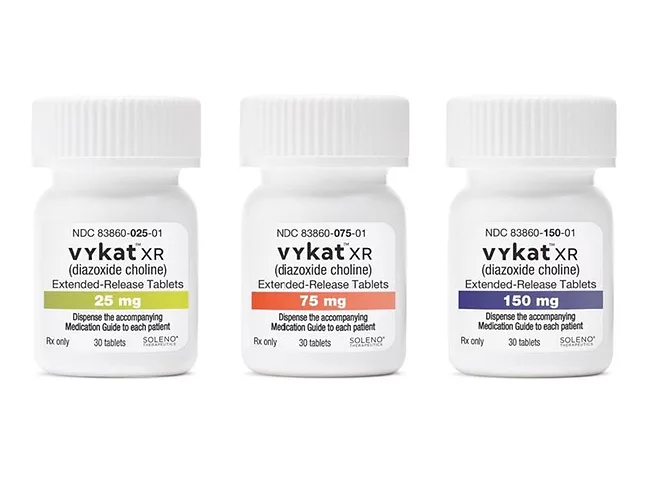
Becoming the first treatment for rare genetic disorder Prader-Willi syndrome, breakthrough therapy drug DCCR (diazoxide choline) gained U.S. FDA approval as Vykat XR the evening before its March 27 PDUFA date, sending shares of developer Soleno Therapeutics Inc. up 38%.
Building upon its already impressive obesity drug portfolio, Novo Nordisk A/S has licensed a triple agonist of the receptors for GLP-1, GIP and glucagon from United Biotechnology Co. Ltd. China-based United is getting $200 million up front and the chance to earn up to $1.8 billion in milestone payments. United Biotechnology retains the rights to subcutaneously administered UBT-251, which is in the early stages of development for treating obesity, type 2 diabetes and other diseases, in China, Hong Kong, Macau and Taiwan while Bagsværd, Denmark-headquartered Novo get exclusive rights to develop, manufacture and commercialize the triple agonist receptor across the rest of the world.
The U.S. FDA rejected, for the second time, Elevar Therapeutics Inc.’s NDA of a novel combination therapy for advanced liver cancer, which comprised Jiangsu Hengrui Pharmaceutical Co. Ltd.’s PD-1 inhibitor camrelizumab and HLB Co. Ltd.’s small-molecule tyrosine kinase inhibitor, rivoceranib.
Visen Pharmaceuticals Co. Ltd. announced its initial public offering (IPO) on the Hong Kong Stock exchange (HKEX) to raise roughly HKD$603.3 million (US$77.6 million) to advance its pipeline of endocrinology assets.
In what it says is the biggest obesity deal to date, Zealand Pharma A/S has signed up Roche AG to a potential $5.3 billion global collaboration and license agreement to develop petrelintide, an amylin analog that is currently in phase IIb development. The two companies will co-develop and co-commercialize petrelintide and combination products, including a fixed-dose combination of petrelintide and CT-388, Roche’s dual GLP-1/GIP receptor agonist.
Boehringer Ingelheim GmbH terminated its second metabolic dysfunction-associated steatohepatitis (MASH) alliance on March 6, ending an $870 million license agreement inked with Yuhan Corp. for dual GLP-1/FGF21 agonist, BI-3006337 (YH-25724). Yuhan said March 7 that Boehringer, of Ingelheim, Germany, returned rights to YH-25724, a dual-acting glucagon-like peptide-1 and fibroblast growth factor 21 receptor agonist, based on the counterparty’s “strategic judgement” on developing MASH therapeutics.
Abbvie Inc. is buying into the obesity fray in a potential $1.875 billion development and commercialization agreement with Danish peptide drug discovery specialist Gubra A/S. In addition, there will be a $350 million up-front payment as Abbvie takes over the reins of GUB-014295 (referred to as Gubamy), a long-acting analog of the satiety hormone amylin, currently in phase I development.
 RSS
RSS