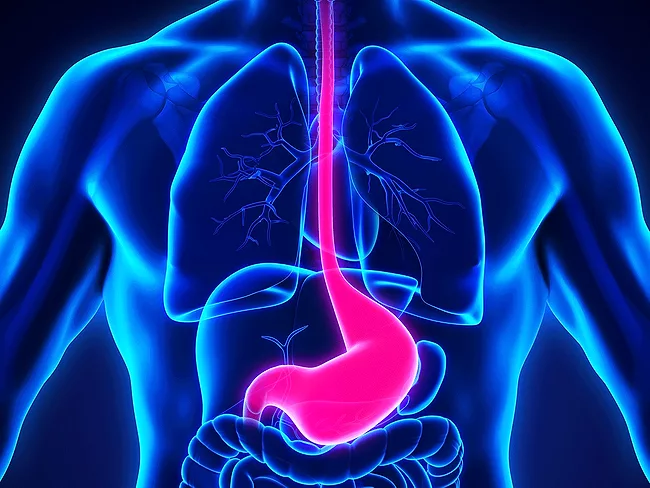
A paper last month in the Journal of Clinical Oncology reported on the pooled analysis of data showing that the use of neoadjuvant immune checkpoint inhibitors work better than the frequently used FLOT regimen (fluorouracil, leucovorin, oxaliplatin and docetaxel) in certain gastroesophageal adenocarcinoma (GEA) cancers. But there’s plenty more coming down the pike, even as scientific knowledge about the disease advances.
Primary sclerosing cholangitis is an autoimmune disease affecting the liver in which there is reduced expression and function of the bile acid receptor GPBAR1 in the cholangiocytes.
In one of the biggest deals of the waning year, Novo Nordisk A/S is buying Akero Therapeutics Inc. to bolster its metabolic dysfunction-associated steatohepatitis (MASH)-treatment portfolio. In the $5.2 billion deal, Akero brings its fibroblast growth factor 21 analogue, efruxifermin, which is in a phase III study for treating those with moderate to advanced liver fibrosis and those with cirrhosis.
A new study aimed to investigate the therapeutic effect of ISM012-042 in a chronic T-cell transfer-induced colitis model in mice that mimicked Crohn’s disease.
Takeda Pharmaceutical Co. Ltd. is exiting all work in cell therapies and will seek an external partner to advance the company’s research and clinic-ready cell therapy programs, the company said, noting that it is not currently running any clinical trials using cell therapy technology.
Arcus Biosciences Inc. has announced five new research programs for autoimmune and inflammatory diseases, and is targeting initiation of the first clinical studies next year.
A team of U.S. and South Korean researchers have developed an AI model called MSI-SEER that can not only predict microsatellite instability-high (MSI-H) tumors based on tissue slides, but also flag “what it does not know.” “Have you ever asked ChatGPT anything, and the response was, ‘I don’t know?’” Cheong Jae-ho asked during an interview with BioWorld. “Probably not, and that is the problem with AI now.”
In a deal that could bring more than $2.1 billion in payments to Arbor Biotechnologies Inc., 90-year-old Chiesi Group gained exclusive and global rights to develop and commercialize ABO-101 for primary hyperoxaluria type 1, an ultra-rare disease caused by a mutation in the AGXT gene, as well as an option to go after a limited number of additional targets.
Activation of cannabinoid receptors in the peripheral nervous system may help treat inflammatory and gastrointestinal disorders as well as pain, and several full agonists have been reported but they present safety concerns. Partial agonists, such as those that activate receptors to 20%-50% of full activity, may be safer, yet so far such agonists have emerged serendipitously.
 RSS
RSS