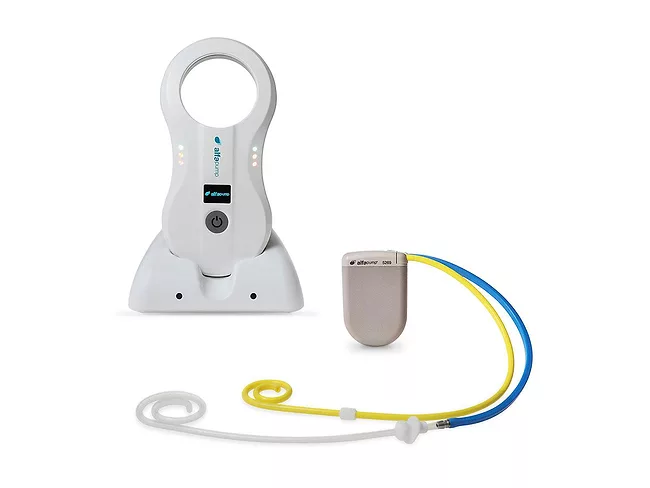
Sequana Medical NV has reported additional data on safety, survival and quality of life from its POSEIDON pivotal study in North America, evaluating its Alfapump device used in the treatment of patients with recurrent or refractory ascites caused by liver cirrhosis. The data were recently presented at the European Association for the Study of the Liver 2023 congress in Vienna.
Researchers from Gat Therapeutics SL reported preclinical data for GTX-011, a first-in-class anti-inflammatory and antifibrotic drug candidate with properties mediated by the inhibition of the TGF-β pathway.
Xuanzhu Biopharmaceutical Co. Ltd., a subsidiary of Sihuan Pharmaceutical Holdings Group Ltd., received marketing approval in mainland China for its anaprozole sodium enteric-coated tablet as a treatment of duodenal ulcer.
Having raised HK$791 million (US$101 million) through an IPO in Hong Kong, Laekna Inc., which develops therapies for cancer and liver fibrosis, now plans to focus on further developing its two lead products in-licensed from Novartis and push its pipeline of 14 products forward.
Three years after stopping development in nonalcoholic steatohepatitis, Genfit SA and partner Ipsen Pharma SA have announced positive phase III data for elafibranor in the treatment of primary biliary cholangitis (PBC) and are preparing to file for U.S. FDA and EMA approval.
Recent genome-wide association studies have elucidated a spliced variant (rs72613567:TA) in 17β-hydroxysteroid dehydrogenase 13 (HSD17B13) found to be associated with decreased risk of chronic liver disorders. The presence of this variant also correlates with delayed onset of autoimmune hepatitis in carriers.
From shift workers to flight attendants, disruptions in circadian rhythms are a risk factor for metabolic disorders. Several sessions held at the recent EASL meeting focused on that link, and how disturbances in the internal clock may increase the risk of hepatic disorders.
Researchers from Johns Hopkins University and Lieber Institute Inc. have synthesized peripherally and luminally restricted inhibitors of the serotonin transporter (SERT) reported to be useful for disorders of gastrointestinal motility, including the treatment of irritable bowel syndrome (IBS).
One of the characteristics of chronic hepatitis B virus (HBV) infection is T-cell exhaustion, which, in turn, is mediated by the PD-1/PD-L1 axis. Researchers at Oligo Therapeutics Inc. reported on ALG-072571, a potent siRNA PD-L1 inhibitor active against HBV infection mouse models.
Nonalcoholic steatohepatitis (NASH) is the most severe form of nonalcoholic fatty liver disease, where in addition to the accumulation of fat in the liver, there is also chronic inflammation and hepatocyte injury. With no therapy approved yet, selective thyroid hormone receptor-β (THR-β) agonism has yielded good results in ongoing clinical development.
 RSS
RSS