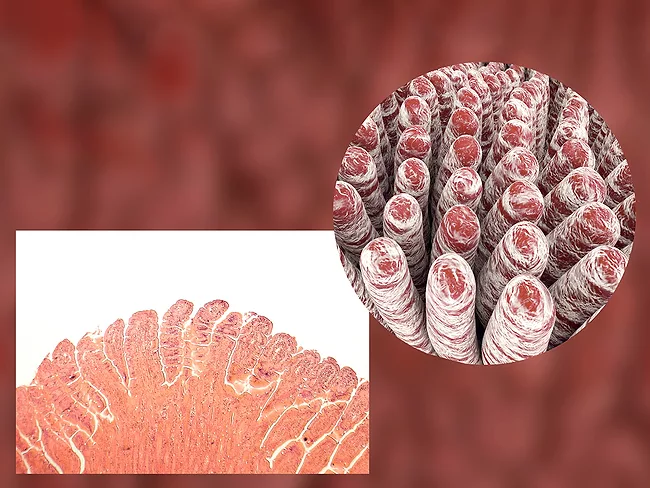
An Insilico Medicine IP Ltd. patent describes Egl nine homolog 1 (EGLN1; HPH-2; PHD2) inhibitors reported to be useful for the treatment of ulcerative colitis and Crohn’s disease.
Once weekly vs. once daily injections plus increased potency vs. Gattex (linaclotide) inspired Ironwood Pharmaceuticals Inc. in its $1 billion takeover of Vectivbio Holding AG, which brings aboard the phase III-stage synthetic glucagon-like peptide-2 analog apraglutide, potentially a best-in-class agent for short bowel syndrome with intestinal failure.
Trouble presaged by U.S. FDA concerns over potential drug-induced liver injury (DILI) caused by obeticholic acid (OCA) 25 mg came to pass during the Gastrointestinal Drugs Advisory Committee meeting May 19 on Intercept Pharmaceuticals Inc.’s accelerated approval effort with the compound.
Currently, there is no FDA-approved drug for nonalcoholic steatohepatitis (NASH), which has evolved into the second leading cause of liver transplantation in the U.S. Researchers from Children’s Hospital Los Angeles and Epigen Biosciences Inc. disclosed preclinical data on EPGN-2154, a novel lysophosphatidic acid LPA1 receptor agonist that has already demonstrated antifibrotic activity in preclinical kidney and liver models.
The U.S. FDA’s release of its briefing document for the upcoming advisory committee meeting on obeticholic acid 25 mg as a fatty liver disease treatment sent Intercept Pharmaceuticals Inc. on a downwards spiral May 17. Soon after the document was released, Intercept stock (NASDAQ:ICPT) dropped as low as $11.41 – down almost 30% from its May 16 close of $16.21. As the day wore on, it regained some of that lost value in heated trading that was more than eight times the company’s average daily volume of 782,285. The rebound helped Intercept close the day at $13.83, down about 15%.
Researchers from Kyushu University and Mochida Pharmaceuticals Co. Ltd. disclosed recent data along with the chemical structure of PAM-369, a novel muscarinic acetylcholine M3 receptor positive allosteric modulator (PAM), being developed for the potential prevention or treatment of NSAID-induced enteropathy.
Inflammatory bowel disease (IBD) is a chronic, immunologically mediated disorder of the gastrointestinal tract in which tissue damage and sustained inflammation lead to long-term dysfunction of the gastrointestinal tract.
An experimental antibiotic was able to prevent recurrent Clostridioides difficile infections (rCDI) by killing bacterial spores as well as growing spores. Researchers from the University of Notre Dame reported their findings in the Proceedings of the National Academy of Sciences on May 8, 2023.
Amgen Inc. and Tscan Therapeutics Inc. have entered into a multi-year collaboration that will use Tscan’s proprietary target discovery platform, Targetscan, to identify the antigens recognized by T cells in patients with Crohn’s disease.

 RSS
RSS