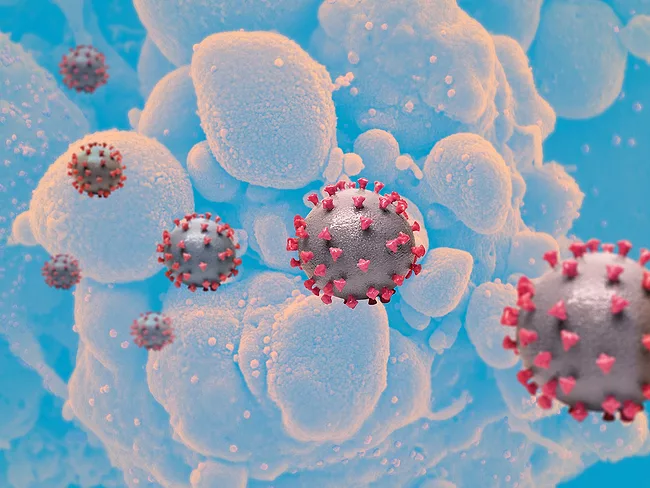
Due to the continual emergence of SARS-CoV-2 mutants, there is an unmet clinical need for broad-spectrum treatments for COVID-19. A potential target for novel treatments is the S2 subunit of the SARS-CoV-2 spike (S) protein, which has been highly conserved across the different variants of the virus.
In the U.S., hospital-borne antimicrobial-resistant nosocomial infections affect over 700,000 people every year causing more than 90,000 deaths along with a $28-45 billion financial burden. This commonly involves either methicillin-resistant Staphylococcus aureus (MRSA), vancomycin-resistant Enterococcus or carbapenem-resistant Acinetobacter baumannii.
In a study published in Nature on Oct. 11, coinciding with the beginning of IDWeek 2023 in Boston, researchers from Harvard Medical School described EVEscape, a method for anticipating the movements of SARS‑CoV‑2 by predicting potential mutations likely to escape current vaccines and treatments.
Epigenetic editing approach used the endogenous cellular mechanisms for regulating gene expression, leading to durable modulation of transcription without affecting the DNA sequence. Chroma Medicine Inc. scientists recently presented a novel epigenetic editing strategy for the treatment of chronic hepatitis B virus (HBV) infection.
Recently, researchers at Cincinnati Children’s Hospital, in collaboration with colleagues in Japan, have developed a human vascular organoid model that accurately mimics the vascular damage caused by SARS-CoV-2.
Aerium Therapeutics Inc. has licensed and commenced development of three monoclonal antibodies (MAbs) with broad and potent activity against the predominant variants of SARS-CoV-2, including those containing the F456L mutation, such as EG.5.1. These antibodies could provide an option to protect immunocompromised populations from severe COVID-19.
The Biomedical Advanced Research and Development Authority (BARDA), part of the U.S. Department of Health and Human Services’ (HHS) Administration for Strategic Preparedness and Response, has awarded Vir Biotechnology Inc. approximately $50 million in new funding to advance the development of novel monoclonal antibody (MAb) candidates and delivery solutions to widen the applicability of MAbs in COVID-19 and in pandemic preparedness and response.
The development of new antimicrobials to combat bacterial resistance is an urgent need given the increasing presence of multidrug-resistant organisms, an important concern especially for vulnerable individuals.
Synthetic, multi-epitope peptide vaccines are becoming an attractive universal influenza vaccine strategy. Longhorn Vaccines & Diagnostics LLC has created LHNVD-105, an influenza vaccine candidate consisting of unconjugated multi-epitope influenza peptides.
 RSS
RSS